Donate zakat to ZMT Primary Healthcare Network and it goes into a separate zakat account, spent only on patients who meet Shariah criteria: consultations, medicines, lab tests and specialist treatment at 33 clinics and 4 mobile eye clinics across Karachi.
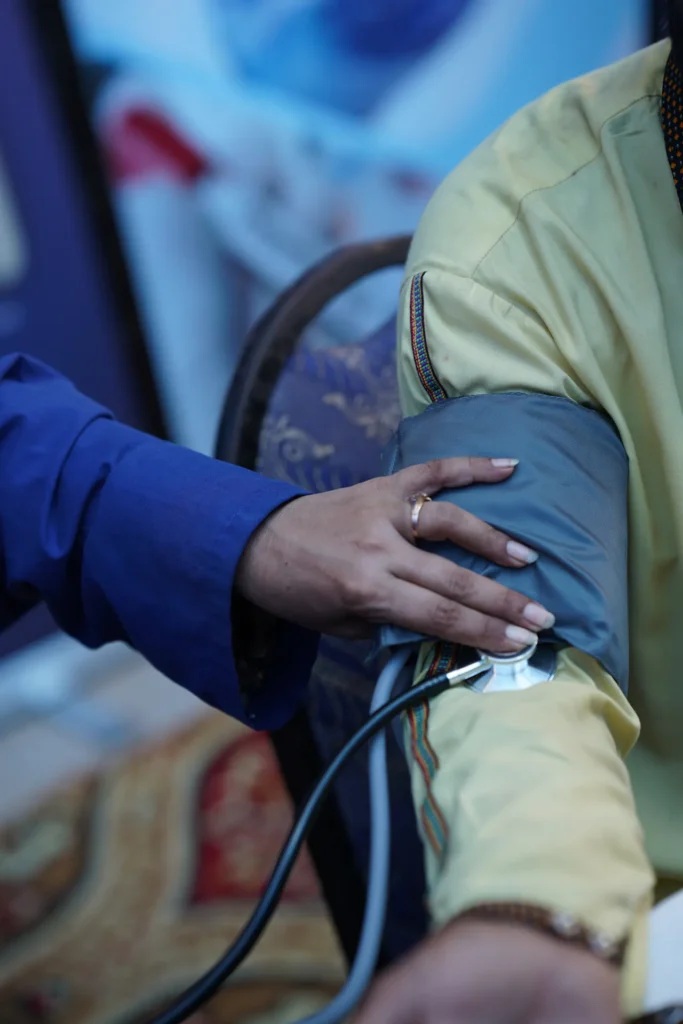

Your zakat at ZMT pays for the medical care of patients who cannot afford it and who qualify to receive zakat: doctor's consultations, prescribed medicines, laboratory tests and treatment in ZMT's specialised programmes. It is held in its own bank account and is not mixed with general donations.
ZMT is a primary healthcare network. Its clinics are the first place a mother brings a feverish child, or a labourer comes with a cough that will not clear, in the densely populated suburbs of Karachi. Primary care is where illness is cheapest to treat and easiest to catch, which is why zakat for healthcare spent at this level stretches further than the same rupee spent once a patient needs a hospital bed.
Most of that work happens in the general clinics, which recorded 1,187,190 outpatient visits in 2023-24 according to ZMT's published annual report. Alongside them run six focused programmes, each with its own published results for the same year:
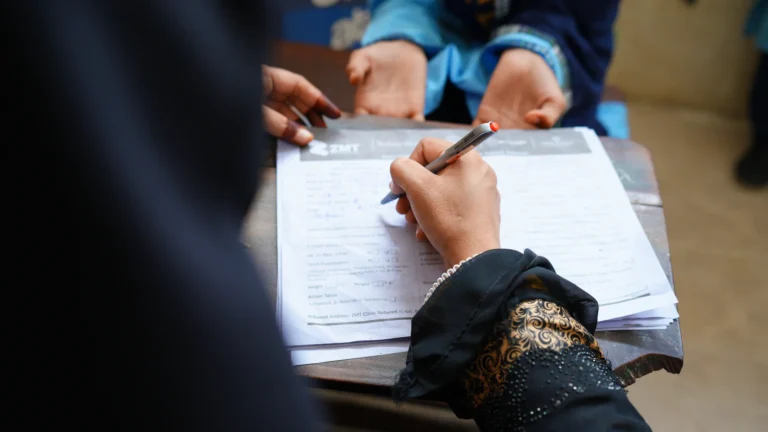
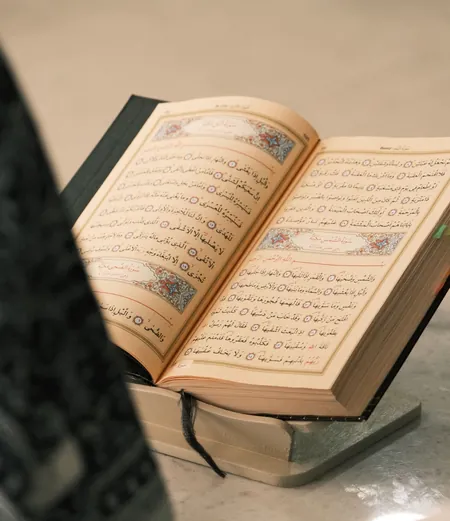
Yes. ZMT is a zakat eligible healthcare NGO: it accepts zakat into a dedicated zakat account at Habib Metropolitan Bank, its zakat process is endorsed and certified by Al Hamd Shariah Advisory, and zakat is spent only on patients who are screened and found eligible under Shariah criteria.
The Quran names eight categories of people who may receive zakat in Surah At-Tawbah, verse 60: the poor (al-fuqara), the needy (al-masakin), those who administer it, those whose hearts are to be won over, the freeing of captives, those in debt (al-gharimin), the cause of Allah and the stranded traveller. A patient who cannot pay for treatment usually falls within the first two, and a family that has borrowed to cover medical bills can fall within the sixth.
Scholars widely accept zakat for medical treatment of a poor patient, because the benefit reaches an eligible person directly. ZMT's guide on whether zakat can be used for medical treatment sets out the rulings in more detail.
Before giving zakat to any organisation, check its registrations. ZMT is registered under the Sindh Trust Act 2020 and with the Sindh Healthcare Commission, certified by the Sindh Charity Commission and the Pakistan Centre for Philanthropy (PCP-2018/547), holds NTN 3922963-7, and is approved by the Federal Board of Revenue under section 2(36)(c) of the Income Tax Ordinance. Copies are on the legal certifications and documents page.
Each patient who may be treated from zakat is screened first. The screening looks at:
Four safeguards sit between your transfer and a patient's treatment.
Zakat is paid into its own account, titled for zakat, so it cannot be spent as a general donation.
ZMT's zakat process is endorsed and certified by Al Hamd Shariah Advisory.
ZMT's accounts are independently audited, and annual reports are published for every year since 2020-21.
When you upload proof of payment, ZMT sends an e-receipt to the email you give.
You donate zakat to ZMT by bank transfer to the zakat account, then upload proof of payment on the donation page so the gift is recorded as zakat and an e-receipt is issued. Doorstep collection and walk-in giving are also available.
Zakat is 2.5% of zakatable wealth held for a full lunar year above the nisab. The ZMT calculator adds it up for you.
Send the amount from your banking app or branch to the zakat account below, not the general one.
On the donation page, enter your name, email and amount, choose Zakat Account and attach the transfer slip.
ZMT emails an e-receipt. Keep it with your zakat records and for any tax credit claim.
Use ZMT's zakat account at Habib Metropolitan Bank, which ends in 2330, so your payment is recorded and spent as zakat. The general donation account ends in 2322 and is for sadaqah and other gifts.
6013720311714162330PK04MPBL0137027140162330MPBLPKKA037 · Branch code 376013720311714162322PK26MPBL0137027140162322MPBLPKKA037 · Branch code 37To pay zakat online, use your banking app or internet banking. After the transfer, upload the slip or screenshot on the ZMT donation page and select the zakat account there too. Matching the account on both sides is what keeps your zakat in the zakat ledger.

You owe 2.5% of your zakatable wealth once it has stayed above the nisab for one full lunar year. The nisab is the value of 87.48 grams of gold or 612.36 grams of silver, and most scholars in Pakistan apply the silver figure because it is the lower threshold.
Zakatable wealth includes cash at home and in the bank, gold and silver, the market value of business stock, money others owe you that you expect to recover, and investments such as shares and savings certificates. You subtract debts that are due now. The step by step zakat calculation guide works through each category, and the calculator applies today's gold and silver rates for you.
The table shows what different amounts of zakat could pay for, using the unit costs ZMT publishes on its programme pages and homepage.
| Your zakat | Zakatable wealth | What it could cover at ZMT's published costs |
|---|---|---|
| Rs 7,500 | Rs 300,000 | One hepatitis C PCR test (Rs 7,000) and two hepatitis C screenings (Rs 250 each) |
| Rs 25,000 | Rs 1,000,000 | One hundred hepatitis C screenings at Rs 250 each |
| Rs 61,250 | Rs 2,450,000 | 175 consultations with the required medicines at Rs 350 each |
| Rs 125,000 | Rs 5,000,000 | Twenty five children through a full recovery course for moderate acute malnutrition at Rs 5,000 each |
Under the Zakat and Ushr Ordinance 1980, banks deduct 2.5% at source from savings and profit and loss sharing accounts on the first day of Ramadan when the balance is at or above the nisab the government notifies that year. For 1447 AH the figure was Rs 503,529, as reported by Profit. Current accounts are not deducted. That money goes to the government's zakat system, not to a charity you choose. If you would rather give your own zakat, you can file a CZ-50 declaration with your bank before the deduction date. Either way, note any amount already deducted when you calculate the rest.
Pay zakat on your zakat anniversary, the date each lunar year on which your wealth was above the nisab. Many people in Pakistan set that date in Ramadan, which is expected to begin around 8 February 2027, subject to the sighting of the moon.
Whatever date you choose, keep it the same each year so that every year's wealth is counted once. Illness does not keep to a calendar, and ZMT's clinics see patients every working day, so zakat that arrives outside Ramadan reaches patients just as quickly. The Ramadan giving guide has more on giving in the holy month.
Overseas Pakistanis can donate zakat by international transfer to the same zakat account using SWIFT code MPBLPKKA037 and IBAN PK04MPBL0137027140162330, then upload the transfer receipt on the donation page. The guide to donating to Pakistan from abroad sets out the options for overseas donors.
Yes. Zakat can pay for the treatment of a patient who is poor or needy, because the benefit reaches an eligible person directly. At ZMT, zakat covers consultations, medicines, lab tests and specialist treatment for patients who pass the eligibility screening, and it is kept apart from general donations.
No. Zakat is paid into a separate account titled Zubaida Machiyara Trust - Zakat, account number ending 2330, and is spent only on eligible patients. General donations and sadaqah go to a different account ending 2322. Choose the zakat account on the donation form as well, so the records match.
Yes. After your zakat donation, upload the payment proof on the ZMT donation page with your name, email and amount. ZMT then emails you an e-receipt. Keep it with your zakat records, and with your tax papers if you plan to claim a tax credit for the donation.
Not at present. ZMT takes zakat by bank transfer from any banking app or branch, by crossed cheque sent by courier, through doorstep collection in Karachi on +92-21-34981242, or in person at the office. Online bank transfer is the quickest route, followed by uploading the proof on the donation page.
Yes, within limits. ZMT is approved by the Federal Board of Revenue under section 2(36)(c), so donations to it can qualify for a tax credit under section 61 of the Income Tax Ordinance 2001, capped as a share of taxable income. The guide to tax benefits of charitable donations explains how to claim.
The rate of zakat is 2.5% of zakatable wealth, which is one fortieth, paid once a lunar year on wealth that has stayed above the nisab for that year. On Rs 1,000,000 of zakatable wealth, zakat is Rs 25,000. Agricultural produce follows the separate rules of ushr rather than the 2.5% rate.
ZMT screens each patient who may be treated from zakat. The screening looks at family income and resources, the number of dependents, medical expenses already being carried and the urgency of treatment. Only patients who meet the Shariah criteria are treated from the zakat account.
Banks in Pakistan deduct 2.5% from savings and profit and loss sharing accounts on 1 Ramadan when the balance is at or above that year's notified nisab. That amount goes to the government's zakat system. Note it when you calculate your total, and file a CZ-50 declaration with your bank if you prefer to give zakat yourself.
Yes. In Karachi, call +92-21-34981242 or email info@zmtclinics.org and ZMT will arrange to collect your zakat from your home or office. Tell the team it is zakat so it is recorded in the zakat account, and ask for the e-receipt to be sent to your email address.
Under the Hanafi school, which most Muslims in Pakistan follow, gold and silver jewellery counts as zakatable wealth, including jewellery that is worn. Other schools of thought differ on jewellery in regular use, so ask a scholar you trust if you follow another school. The ZMT calculator includes a field for gold and silver.
Zakat is an obligation of 2.5% on wealth above the nisab, given once a lunar year to the eight groups named in the Quran. Sadaqah is voluntary, has no minimum or fixed date and can fund a wider range of causes. ZMT takes both, into separate accounts; see giving sadaqah to ZMT.
Most Hanafi scholars say no, because zakat must become the property of an eligible person, which a building or a salary does not. That is why ZMT spends zakat on patients' treatment. To fund a clinic's running costs or equipment, give sadaqah or a general donation, for example to sponsor a ZMT clinic.
ZMT runs 33 clinics and 4 mobile eye clinics across Karachi, concentrated in densely populated and underserved neighbourhoods. Every location, with timings, is on the Karachi Wellness Map. Clinics and the office are open from 9am to 5pm.
ZMT publishes an annual report every year, with downloads from 2020-21 onwards. The 2023-24 report records 1,452,883 patients benefited, PKR 126,332,976 in medicines consumed and PKR 399,205,954 in total operational expenses. Each programme page also lists that year's screening and treatment numbers.
Your zakat reaches patients in Karachi's most crowded neighbourhoods, screened and treated at a ZMT clinic close to their homes.
