
By ZMT Primary Healthcare Network | zmtclinics.o
There’s a dangerous myth that persists in Pakistan’s low-income communities.
It goes like this: “I’ll go to the doctor when I’m sick.”
The problem? By the time many conditions become visibly “sick,” they’ve already done significant — sometimes irreversible — damage. High blood pressure silently destroys kidneys and hearts for years before a stroke announces itself. Diabetes ravages nerves and blood vessels while a person feels “fine.” Cervical cancer is nearly 100% preventable when caught early — but almost always fatal when caught late.
General health check-ups and preventive screenings exist to break this cycle. They find the problems before the problems find you.
At ZMT Clinics — Karachi’s largest primary healthcare network with 45 clinics serving the city’s most underserved communities — general health check-ups are not a luxury add-on. They are the foundation of everything we do.
This article tells you exactly why they matter, what they include, what the data says, and — importantly — why your Zakat and Sadaqah are directly funding this life-saving work.
The Silent Killers: Why “Feeling Fine” Isn’t Enough
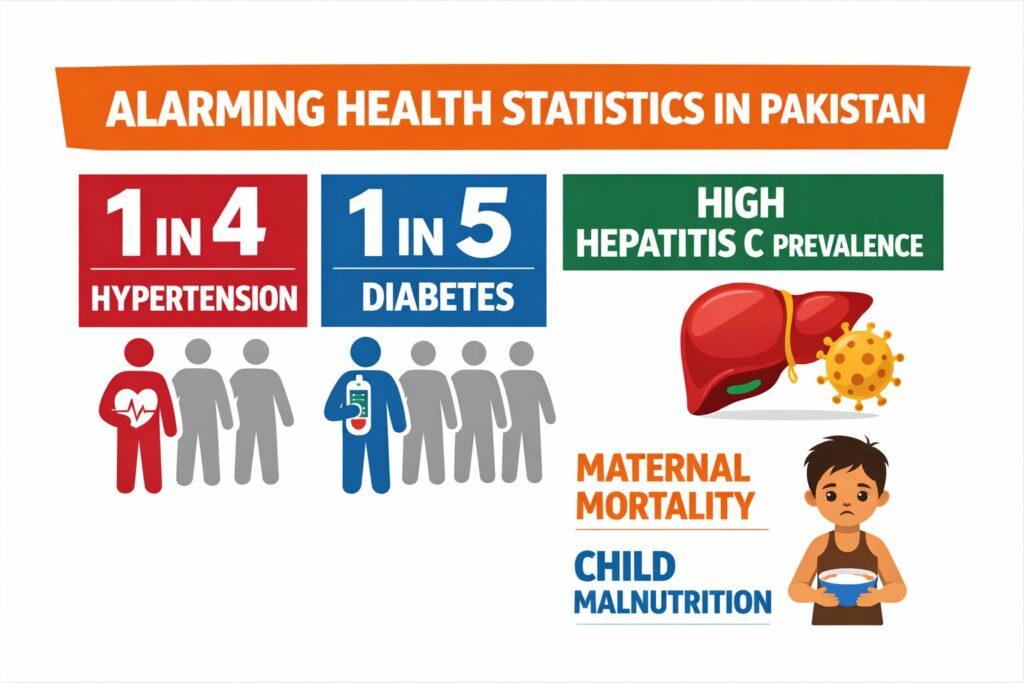
Let’s start with the numbers that should alarm all of us:
- 1 in 4 Pakistani adults has hypertension — and the majority are unaware.
- 1 in 5 Pakistani adults has diabetes or pre-diabetes — with similar rates of unawareness.
- Pakistan has the world’s highest Hepatitis C prevalence — yet most infected individuals remain undiagnosed.
- Maternal mortality in Pakistan is 178 per 100,000 live births — one of the highest in Asia.
- Childhood malnutrition affects over 40% of Pakistani children under 5 — with most cases going undetected until severe.
What do these statistics have in common? They all represent conditions that are detectable before they become deadly — and all of them are conditions that ZMT’s health check-up programs are specifically designed to catch.
What Is a General Health Check-Up at ZMT?
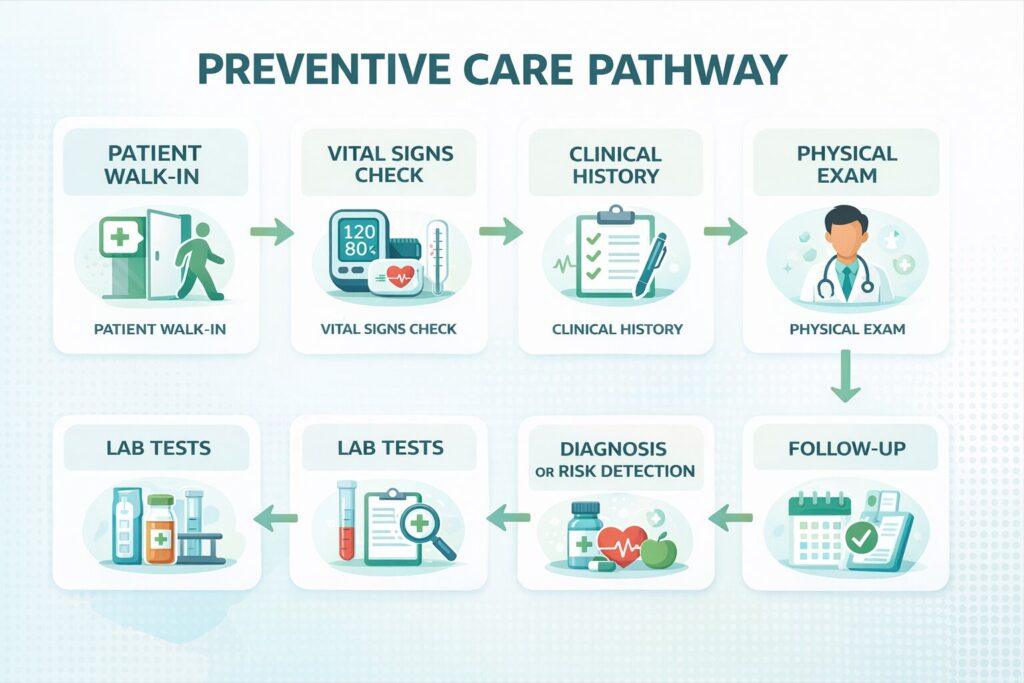
When a patient visits a ZMT clinic for a general check-up, they’re not just getting a quick temperature reading and a pat on the back. Our clinical team conducts a systematic assessment designed to identify both existing conditions and risk factors.
A typical ZMT general health assessment includes:
Vital Signs Measurement
- Blood pressure (BP) — identifying hypertension, one of the biggest silent killers in Pakistan
- Heart rate and rhythm assessment
- Respiratory rate
- Temperature
- Oxygen saturation (SpO2) where relevant
- Weight and height (with BMI calculation)
Clinical History Review
- Chief complaint and current symptoms
- Past medical history (previous illnesses, surgeries, hospitalizations)
- Family history of chronic diseases
- Medication review
- Lifestyle assessment (diet, activity, smoking)
Physical Examination
- Head-to-toe systematic examination by a qualified physician
- Cardiovascular and respiratory assessment
- Abdominal examination
- Lymph node assessment
- Skin and musculoskeletal review
- Neurological screening where indicated
Targeted Screening Based on Profile
This is where ZMT’s approach becomes genuinely comprehensive. Based on the patient’s age, sex, and risk factors, our doctors recommend additional screening:
- Blood glucose and HbA1c for patients with diabetes risk factors
- CBC (Complete Blood Count) to detect anemia, infections, or blood disorders
- Urine analysis to screen for kidney disease and diabetes
- Hepatitis B and C screening — critical in Pakistan’s high-burden context
- Antenatal screening for pregnant women
- Child growth monitoring and developmental assessment for pediatric patients
How Health Check-Ups Literally Save Lives: Real Scenarios
Let me walk you through how this plays out in practice — because statistics alone don’t capture the human reality.
Scenario 1: The Silent Hypertension Case
Fatima, 45, came to ZMT for a routine check-up after her neighbor suggested it. She had no complaints. She felt completely normal.
Her blood pressure reading: 185/110 mmHg — severely elevated.
She had been walking around with this for months, maybe years. At that level of hypertension, her risk of stroke was massively elevated. Without that check-up, her first “symptom” might have been a fatal or disabling stroke.
With ZMT’s intervention, Fatima was started on appropriate antihypertensive medication (covered by ZMT’s free pharmacy program), given dietary counseling, and scheduled for regular follow-up.
That single check-up may have added decades to her life.
Scenario 2: The Pre-Diabetic Intervention
Rashid, 38, a daily laborer, came to ZMT complaining of occasional tiredness. His fasting blood glucose was 7.8 mmol/L — in the pre-diabetic range.
Caught at this stage, diabetes is reversible with lifestyle changes. ZMT’s patient education team counseled Rashid on dietary modification, physical activity, and weight management. A follow-up three months later showed his glucose levels had normalized.
If that check-up hadn’t happened — or if Rashid had waited until he was “really sick” — he would likely have progressed to Type 2 diabetes, with all its devastating complications: kidney failure, neuropathy, blindness, amputations.
Scenario 3: The Antenatal Catch
Noor, 24, in her second trimester, visited a ZMT clinic for her first antenatal check-up. Her hemoglobin was found to be 7.2 g/dL — severely anemic.
Anemia in pregnancy is a major cause of maternal mortality and poor fetal outcomes in Pakistan. Noor was started on iron supplementation, given nutritional counseling, and monitored closely for the rest of her pregnancy.
She delivered a healthy baby. Both survived.
The Economics of Prevention: Why Check-Ups Save Money Too
Here’s a reality that healthcare economists call “the prevention dividend.”
Treating high blood pressure with basic medication costs approximately Rs. 500–1,000 per month. Treating the stroke it causes — with hospitalization, rehabilitation, and ongoing care — can cost Rs. 500,000 or more, and often leaves the patient permanently disabled.
Detecting and managing pre-diabetes costs almost nothing. Treating diabetic kidney failure requiring dialysis costs Rs. 30,000–50,000 per month indefinitely.
The math is simple: prevention is dramatically cheaper than treatment.
And yet, in Karachi’s underserved communities, it’s prevention that people can’t access — because they lack the time, money, or knowledge to seek it out before they’re sick.
This is exactly the gap that ZMT fills. Our check-ups don’t just save lives — they prevent the financial catastrophes that destroy families when a breadwinner becomes seriously ill.
Child Health Check-Ups: Protecting the Next Generation
Children represent ZMT’s most important patient population. The first five years of life are the most critical window for healthy development — and problems identified early can be addressed before they cause permanent damage.
ZMT’s child health check-ups include:
- Growth monitoring: Weight-for-age, height-for-age, and weight-for-height measurements plotted against WHO growth standards. Deviation from the growth curve is the earliest warning sign of malnutrition or chronic illness.
- Developmental milestones assessment: Checking whether children are meeting age-appropriate cognitive, motor, language, and social milestones.
- Immunization status review: Confirming that children are up to date on all required vaccines.
- Nutritional assessment and counseling: Identifying deficiencies and providing guidance to mothers on appropriate feeding.
- Vision and hearing screening: Basic checks that catch problems affecting school performance and development.
ZMT’s Malnutrition Program grew directly out of the data generated by these child health check-ups — identifying a pattern of malnutrition that required a dedicated intervention program.
Maternal Health Screenings: Two Lives in One Visit
Every antenatal visit at a ZMT clinic is a check-up for two people simultaneously — mother and baby. The screenings we conduct during pregnancy are among the most life-saving interventions in medicine.
Key antenatal screenings at ZMT include:
- Blood pressure monitoring — to detect pre-eclampsia, which can be fatal if unmanaged
- Hemoglobin testing — to identify and treat anemia before delivery
- Urine protein testing — another marker for pre-eclampsia
- Blood glucose testing — to identify gestational diabetes
- Fetal growth assessment
- Hepatitis B and C screening — to prevent mother-to-child transmission
- Tetanus immunization
In Pakistan, where many women deliver without any antenatal care, even a single well-conducted antenatal visit can be lifesaving.
Why Your Zakat and Sadaqah Fund These Check-Ups
ZMT operates entirely on the generosity of donors. Our general health check-ups, screenings, laboratory tests, and medications are provided free or at minimal cost — made possible only because people like you choose to direct their Zakat, Sadaqah, and charitable giving to us.
When you donate to ZMT, your contribution: – Funds consultations for patients who cannot afford private clinics – Pays for laboratory tests that diagnose silent diseases – Covers the cost of medicines prescribed as a result of check-ups – Supports follow-up visits and monitoring – Enables preventive programs like vaccination and antenatal care
ZMT is a fully Zakat-eligible organization. Every Rupee of Zakat is used exclusively for eligible patients’ direct medical benefit — in complete compliance with Islamic principles.
Sadaqah Jariyah perspective: When you fund a health check-up that catches a disease early, the benefits ripple forward through time. A mother who stays healthy raises healthy children. A father who avoids a stroke continues providing for his family. A child whose malnutrition is caught and treated grows into a productive adult. Your charity doesn’t just help once — it changes life trajectories.
To understand more about the full range of services your donation supports, read our Comprehensive Guide to ZMT Primary Healthcare Services.
How to Get a Health Check-Up at ZMT
Getting a general health check-up at ZMT is straightforward:
- Find your nearest clinic — ZMT has 45 locations across Karachi’s underserved communities.
- Walk in — No prior appointment required.
- Register at the reception desk. Bring your CNIC or any ID.
- Wait to be seen — Our teams work efficiently to minimize waiting times.
- Speak openly with your doctor — Tell them your concerns, family history, and any symptoms. The more information you share, the better care you receive.
- Follow up as recommended — The check-up is just the beginning; the follow-up is where the real benefit occurs.
Operating hours: 9am – 5pm Contact: info@zmtclinics.org | Phone: +92 323 2115770
If you’re a first-time visitor and want to know what to expect, read our detailed guide: What to Expect During Your First Visit to a ZMT Clinic.
The Bottom Line
General health check-ups are not a luxury. They are not something “for rich people.” They are the single most effective tool we have for preventing the diseases that disproportionately kill and disable people in Pakistan’s most vulnerable communities.
ZMT has built its entire network around this principle: that preventive care, delivered early and consistently, saves more lives per Rupee than any other healthcare intervention.
Every check-up we conduct is made possible by the generosity of our donors — people who believe, as we do, that no woman or child should suffer from a disease that a timely check-up could have caught.
If you want to support this work — donate your Zakat or Sadaqah to ZMT today.
If you want to understand the broader landscape of healthcare in Pakistan — read our deep dive into Why Regular Health Screenings Are Essential in Karachi.
Because in healthcare, what you don’t know can hurt you.
ZMT Primary Healthcare Network — Quality primary healthcare for every woman and child in Pakistan. Donate your Zakat and Sadaqah at zmtclinics.org
