
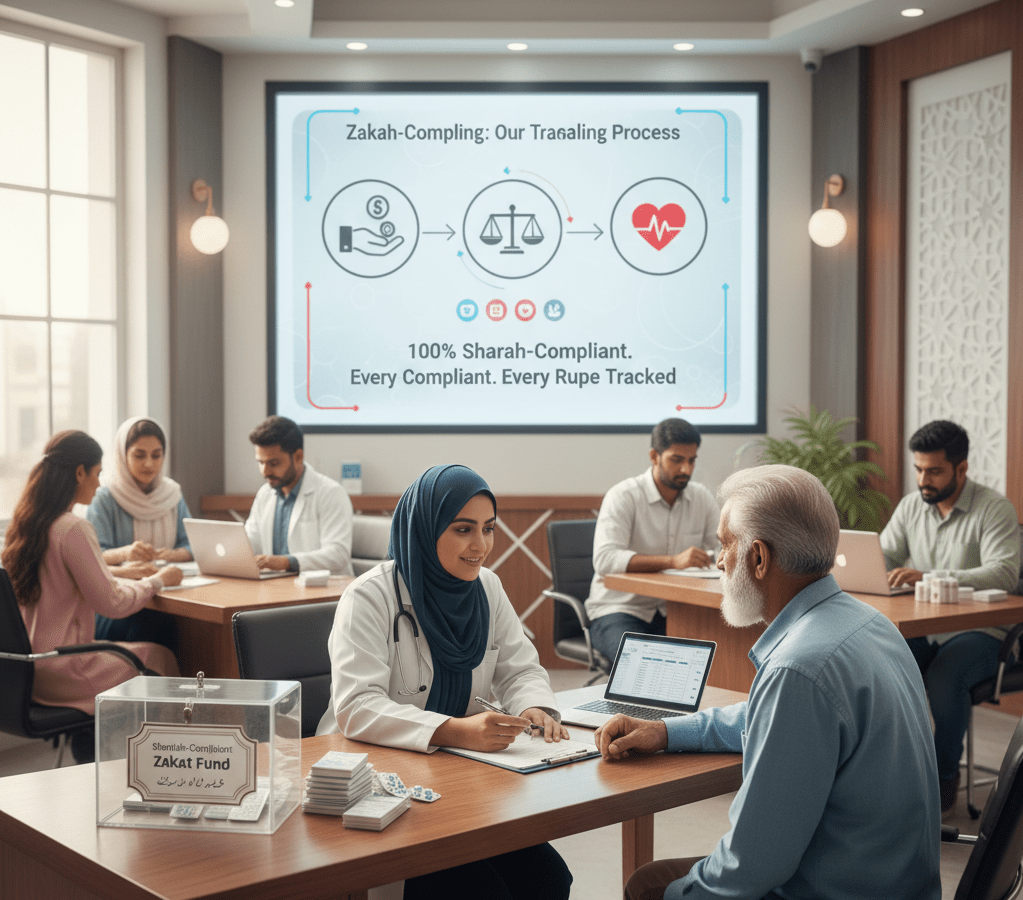
A Shariah-Compliant, Transparent Approach to Saving Lives
Zakat is not charity in the general sense. It is an obligation, a trust, and a right of the poor. In Pakistan, millions of people fulfill this obligation every year with sincerity, yet many remain uncertain about one critical question:
Is my Zakat truly reaching those who are eligible, and is it being used in the most impactful way?
At Zubaida Machiyara Trust, we address this question openly and responsibly. As a Zakat-eligible, non-profit primary healthcare network operating exclusively in Karachi, our work is rooted in one clear mission: to use Zakat strictly according to Islamic principles while delivering free, lifesaving healthcare to those who cannot afford it.
For individuals searching for a reliable option for Zakat donation in Pakistan, especially those who want their Zakat to support medical treatment, this page explains everything clearly, transparently, and honestly.
Understanding Zakat and Healthcare in Today’s Pakistan
In many low-income communities across Karachi, illness is not just a health issue. It is an economic catastrophe. A single medical emergency can push an entire family deeper into poverty. Mothers delay treatment. Fathers ignore symptoms. Children remain untreated because healthcare costs are simply unaffordable.
This is where Zakat plays a critical role.
Islam recognizes poverty not only as hunger or lack of shelter, but also as the inability to meet essential needs. Medical care falls squarely within those essentials. When a person cannot afford diagnosis, medicines, or treatment, they fall within Zakat-eligible categories.
For this reason, many scholars and Islamic jurists agree that Zakat can be used for medical treatment, provided it reaches eligible individuals and is not diverted toward infrastructure or non-eligible expenses.
Zubaida Machiyara Trust was structured with this understanding from the very beginning.
Why Healthcare Is One of the Most Impactful Uses of Zakat
Unlike one-time relief, healthcare Zakat addresses suffering at its most vulnerable point. It prevents long-term disability, protects families from debt, and restores dignity.
When Zakat is used for healthcare:
• A daily wage worker can return to work after treatment
• A mother can survive childbirth safely
• A child can recover from malnutrition
• A patient with Hepatitis C can receive complete treatment instead of lifelong illness
In Karachi, where public hospitals are overcrowded and private healthcare is unaffordable, free primary healthcare funded through Zakat fills a critical gap.
This is why donors increasingly search for Islamic charity organizations and Zakat donation online platforms that focus specifically on healthcare.
Zubaida Machiyara Trust and Zakat Eligibility
Zubaida Machiyara Trust is a registered, Zakat-eligible charitable organization operating a network of 41 free primary healthcare clinics across Karachi. We do not operate commercial hospitals. We do not charge patients. We do not divert Zakat funds into administrative expansion.
Our Zakat utilization is governed by three principles:
- Zakat is distributed only to eligible patients
- Zakat funds are strictly segregated from general donations
- Zakat is spent on direct patient care only
This structure allows donors to fulfill their religious obligation with confidence.
For donors seeking Zakat donation Pakistan options that are compliant, transparent, and impactful, this distinction matters.
Who Receives Zakat at ZMT Clinics
Zakat at Zubaida Machiyara Trust is not distributed in cash. It is used to cover the cost of medical services for individuals who meet eligibility criteria under Islamic guidelines.
These include:
• Individuals living below the poverty line
• Daily wage earners unable to afford treatment
• Widows and female-headed households
• Orphans and dependent children
• Patients with chronic or life-threatening conditions
• Pregnant women requiring medical care
• Families affected by long-term illness
Each patient is assessed carefully. Zakat eligibility is verified through documented screening processes conducted at the clinic level.
This ensures that Zakat reaches those who have a rightful claim to it.
How Zakat Is Used in Healthcare Services
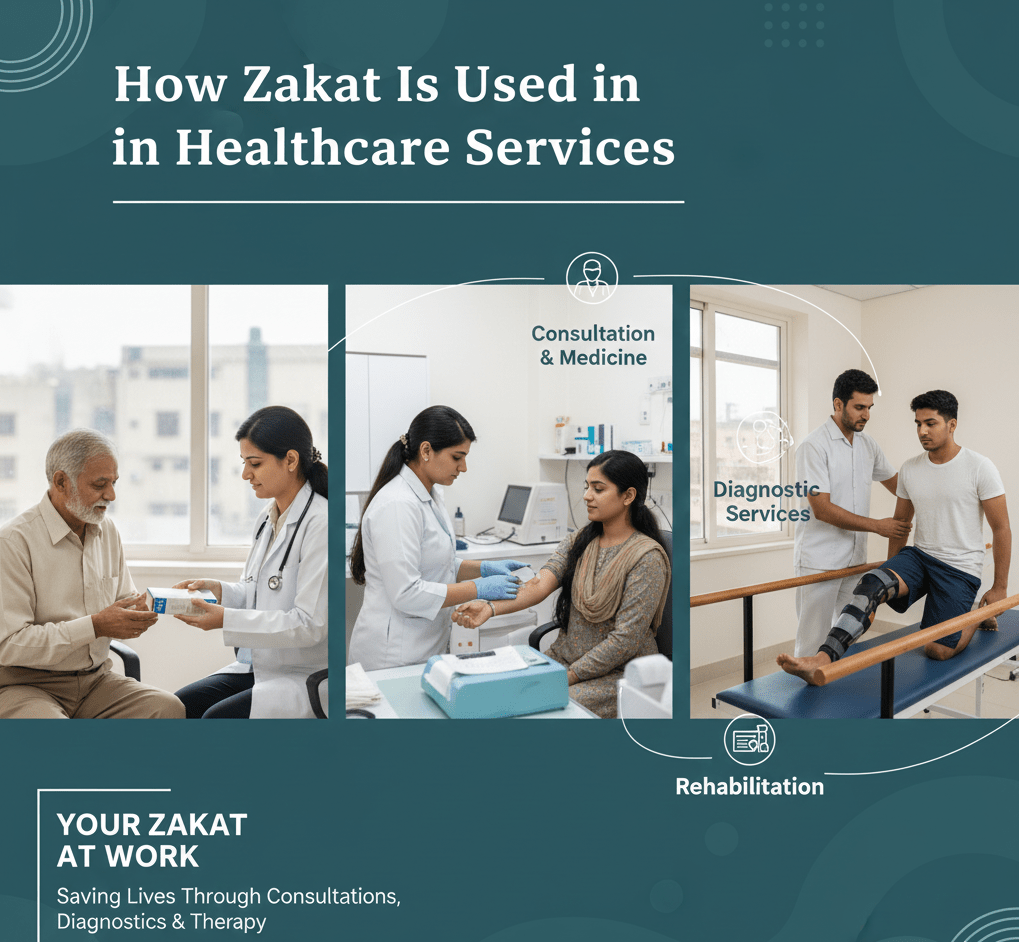
Zakat donations support a wide range of free healthcare services at our clinics. These services are not theoretical. They are provided daily, across Karachi, to thousands of patients.
Zakat is used to cover:
• Medical consultations for eligible patients
• Diagnostic tests and laboratory services
• Essential medicines
• Maternal and child healthcare
• Mental health consultations
• Hepatitis C testing and treatment
• Malnutrition treatment for children
• Eye screening and corrective care
• Vaccinations for preventable diseases
Each of these services addresses a real and immediate need. Each one represents a legitimate use of Zakat when the recipient is eligible.
This is why many donors who once supported general charity organizations in Pakistan now choose healthcare-focused Zakat distribution.
Zakat, Dignity, and Access to Care
One of the most overlooked aspects of Zakat is dignity. Many individuals eligible for Zakat hesitate to ask for financial help. Illness, however, forces them into vulnerability.
By offering free healthcare through Zakat, we remove the shame and discomfort associated with asking for money. Patients receive care without being labeled, exposed, or humiliated.
This approach aligns deeply with Islamic values.
Healthcare provided through Zakat restores dignity while fulfilling obligation.
Zakat vs General Donations at ZMT
It is important to clarify the difference between Zakat and general charitable donations within our system.
Zakat funds are restricted and used only for eligible patient care. They are not used for clinic construction, salaries beyond direct service provision, or administrative costs.
General donations and Sadaqah allow broader flexibility. They help sustain clinic operations, outreach programs, awareness campaigns, and long-term capacity building.
For donors searching for both donation websites in Pakistan and Zakat-specific platforms, this distinction ensures informed giving.
Why Karachi Needs Zakat-Funded Healthcare Urgently
Karachi is Pakistan’s largest city, yet vast areas remain medically underserved. Informal settlements, densely populated neighborhoods, and low-income communities face the highest disease burden with the least access to care.
Public hospitals are overwhelmed. Private clinics are unaffordable. Preventable diseases become fatal due to delays.
By directing Zakat toward free healthcare in Karachi, donors address one of the most urgent humanitarian needs in the country.
This local focus is what differentiates Zubaida Machiyara Trust from national-level charities with diluted impact.
Trust, Accountability, and Religious Responsibility
Zakat is not a donation of choice. It is a responsibility. We treat it as such.
Our processes are designed to ensure:
• Clear separation of Zakat funds
• Proper documentation at clinic level
• Internal audits and oversight
• Compliance with Islamic principles
• Transparency in utilization
For donors seeking a trustworthy Zakat donation online option, this framework provides reassurance.
Choosing the Right Organization for Zakat Donation in Pakistan
Not every charity is suitable for Zakat. Not every healthcare NGO follows proper Zakat compliance.
When choosing where to give, ask:
• Is the organization Zakat eligible?
• Does it serve eligible beneficiaries?
• Are funds segregated and audited?
• Is impact measurable and local?
Zubaida Machiyara Trust meets these criteria through its exclusive focus on free primary healthcare for underserved communities in Karachi.
Your Zakat Can Save Lives Today
Every Zakat donation entrusted to us directly funds treatment for someone who cannot afford it. It may be a child recovering from malnutrition, a mother receiving prenatal care, or a patient cured of Hepatitis C.
This is not abstract impact. It happens daily, inside our clinics, across Karachi.
If you are looking for a responsible, Shariah-compliant way to fulfill your Zakat donation in Pakistan, your Zakat can become healthcare, healing, and hope.
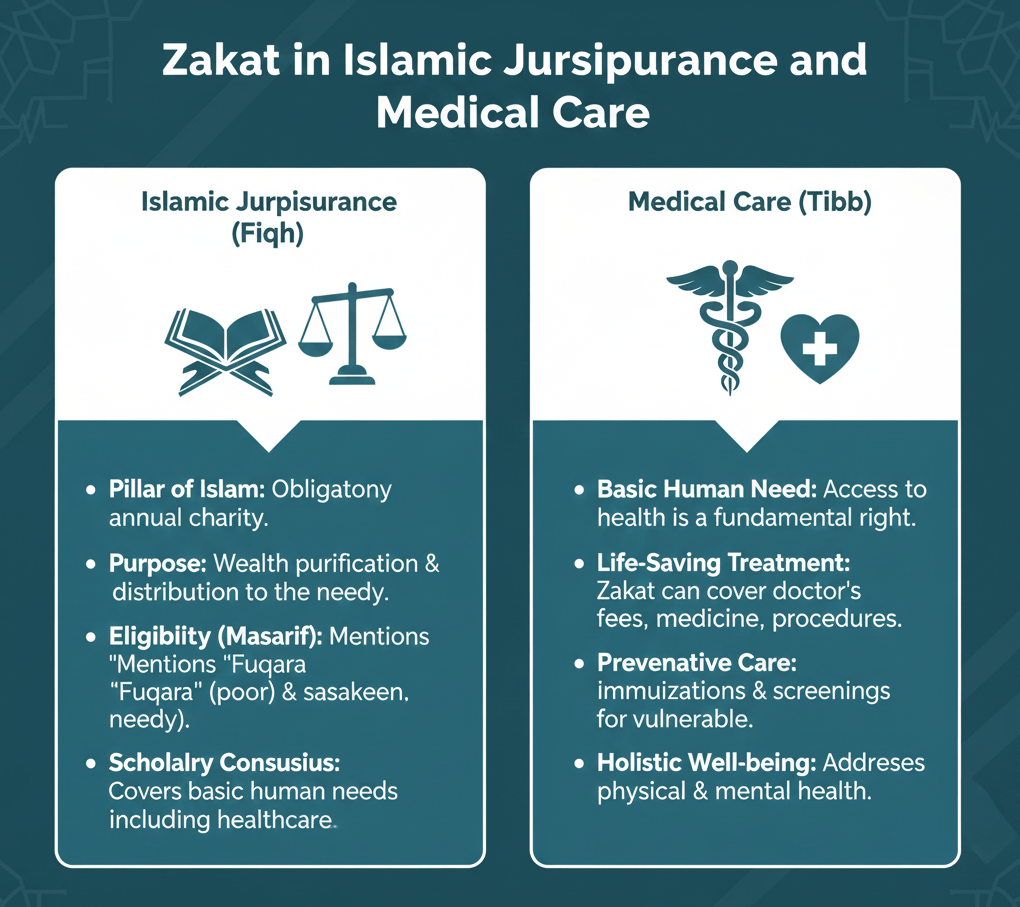
Zakat in Islamic Jurisprudence and Medical Care
One of the most common concerns among donors is whether Zakat can legitimately be used for healthcare services rather than direct cash distribution. This concern is valid and deserves a clear, scholarly answer.
Classical and contemporary Islamic scholars agree that Zakat may be used to fulfill essential needs of eligible recipients. Medical treatment falls under daruriyyat which are necessities without which life, health, or dignity are compromised.
Illness that cannot be treated due to lack of funds places a person within the category of fuqara or masakeen. In such cases, paying for medical treatment on behalf of the patient fulfills the obligation of Zakat, as long as ownership and benefit reach the eligible individual.
At Zubaida Machiyara Trust, Zakat-funded healthcare services are structured so that:
• The beneficiary is Zakat-eligible
• The service directly benefits the patient
• No Zakat funds are diverted to non-eligible purposes
• Treatment replaces what the patient could not afford
This approach is supported by contemporary fatawa that allow Zakat utilization for treatment, medicines, diagnostics, and healthcare services when poverty prevents access.
Zakat vs Sadaqah and Sadaqah Jariyah in Healthcare
Many donors ask whether they should give Zakat or Sadaqah for healthcare causes. Understanding the difference helps maximize impact.
Zakat is obligatory and restricted. It must go only to eligible individuals and cannot be used for infrastructure or long-term assets.
Sadaqah is voluntary and flexible. It can support clinic expansion, equipment purchases, outreach programs, staff training, and preventive healthcare initiatives.
Sadaqah Jariyah creates ongoing reward. In healthcare, this includes funding medical equipment, diagnostic labs, vaccination programs, or maternal health initiatives that continue benefiting communities over time.
Zubaida Machiyara Trust maintains separate channels for Zakat and non-Zakat donations so donors can choose confidently based on religious intent.
Those searching for charitable donations or charity foundations in Pakistan often appreciate this clarity, as it allows purposeful giving without confusion.
Financial Transparency and Donor Trust
Trust is not claimed. It is demonstrated.
Zakat donors want assurance that their contribution is not mixed, misused, or absorbed into operational overhead. This concern is especially relevant in Pakistan, where many people hesitate to donate due to lack of accountability in the sector.
Zubaida Machiyara Trust addresses this through:
• Strict segregation of Zakat funds
• Clinic-level documentation of Zakat-supported treatments
• Internal verification of eligibility
• Transparent reporting structures
• Compliance with NGO regulatory requirements
Zakat is never used for marketing, expansion, construction, or unrelated activities. Its sole purpose remains patient care for those who qualify.
This transparency is essential for donors comparing different charity organizations in Pakistan or evaluating the best NGO to donate in Karachi for healthcare-focused Zakat.
Why Karachi Needs Zakat Support More Than Ever
Karachi’s population exceeds 20 million, yet access to affordable healthcare remains deeply unequal. Entire neighborhoods rely on informal clinics or delay treatment due to cost.
Key challenges include:
• High disease burden in low-income areas
• Overcrowded government hospitals
• Lack of preventive care
• Rising costs of medicines and diagnostics
• Limited mental health services
• Poor maternal and child health indicators
Zakat-funded healthcare addresses these gaps immediately. It does not wait for policy reform or infrastructure development. It provides treatment where the need exists today.
For donors specifically seeking Zakat donation Pakistan options with measurable, local impact, Karachi represents one of the most urgent priorities.
Program-Specific Zakat Utilization
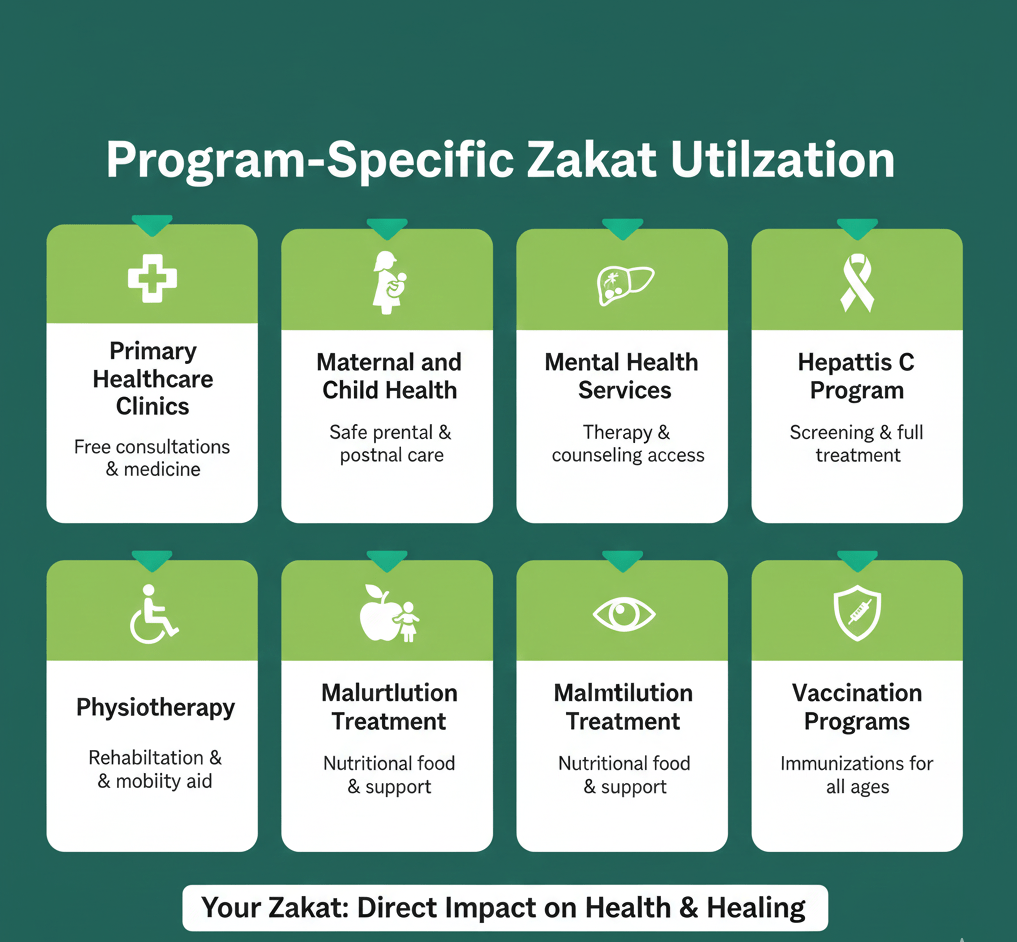
Zakat contributions at Zubaida Machiyara Trust support multiple healthcare programs, each aligned with eligibility and necessity criteria.
Primary Healthcare Clinics
Zakat covers consultations, medicines, and diagnostics for eligible patients across 41 clinics serving underserved communities.
Maternal and Child Health
Pregnant women receive antenatal care, safe delivery referrals, and postnatal support. Infants receive nutrition monitoring and early treatment.
Mental Health Services
Eligible patients receive free psychological consultations and therapy, addressing a critical yet often neglected need.
Physiotherapy
Patients with injuries, disabilities, or chronic pain receive rehabilitative care that restores mobility and independence.
Hepatitis C Program
Testing, diagnosis, and full treatment courses are provided to eligible patients, preventing long-term liver disease and transmission.
Malnutrition Treatment
Children suffering from acute or moderate malnutrition receive therapeutic care, supplements, and monitoring.
Eye Screening
Vision testing and corrective interventions help prevent avoidable blindness among vulnerable populations.
Vaccination Programs
Preventive immunization protects children from life-threatening but preventable diseases.
Each of these programs transforms Zakat into tangible health outcomes.
Emotional Impact and Human Stories
Zakat Allocation and Impact Formula
Many donors ask how their Zakat translates into real impact.
Here is a simplified view:
• A fixed amount of Zakat funds a complete diagnostic cycle for an eligible patient
• A portion supports full Hepatitis C treatment for one individual
• Zakat contributions collectively sustain free clinic operations for thousands
• Small amounts combine to fund maternal healthcare for entire communities
Zakat does not disappear into abstraction. It becomes treatment, recovery, and restored dignity.
Frequently Asked Questions About Zakat Donation
Can I give Zakat online in Pakistan safely?
Yes. Online Zakat donation is permissible when the organization is trustworthy, Zakat-eligible, and transparent about utilization.
Is Zubaida Machiyara Trust Zakat eligible?
Yes. The Trust is a registered, Zakat-eligible NGO providing free healthcare to eligible populations in Karachi.
Is Zakat given directly to patients?
Zakat is used to pay for healthcare services on behalf of eligible patients, which fulfills the requirement of benefit and ownership.
Can Zakat be used for medicines and lab tests?
Yes, when the patient qualifies and cannot afford treatment.
Can overseas Pakistanis give Zakat here?
Yes. Overseas donors often choose local healthcare NGOs to ensure direct and measurable impact.
These answers are structured to meet both donor needs and AI overview standards.
Why Zubaida Machiyara Trust Is the Right Choice for Zakat
For donors evaluating charity hospitals in Pakistan or healthcare NGOs, Zubaida Machiyara Trust stands apart due to:
• Exclusive focus on free primary healthcare
• Localized impact in Karachi
• Strict Zakat compliance
• Transparent operations
• Multiple high-impact health programs
• Respect for donor trust and religious obligation
This combination positions the Trust as a credible choice for Zakat and healthcare-focused giving.
Fulfill Your Zakat With Confidence
Zakat is not just about giving. It is about fulfilling a responsibility with sincerity, wisdom, and care.
When you give Zakat to Zubaida Machiyara Trust, you are not only fulfilling an obligation. You are restoring health, dignity, and hope to those who need it most.
Your Zakat becomes treatment.
Your Zakat becomes healing.
Your Zakat becomes life.If you are seeking a trustworthy, impactful, and Shariah-compliant way to give Zakat donation in Pakistan, this is where your Zakat can make a real difference.
