
By ZMT Primary Healthcare Network |
zmtclinics.org
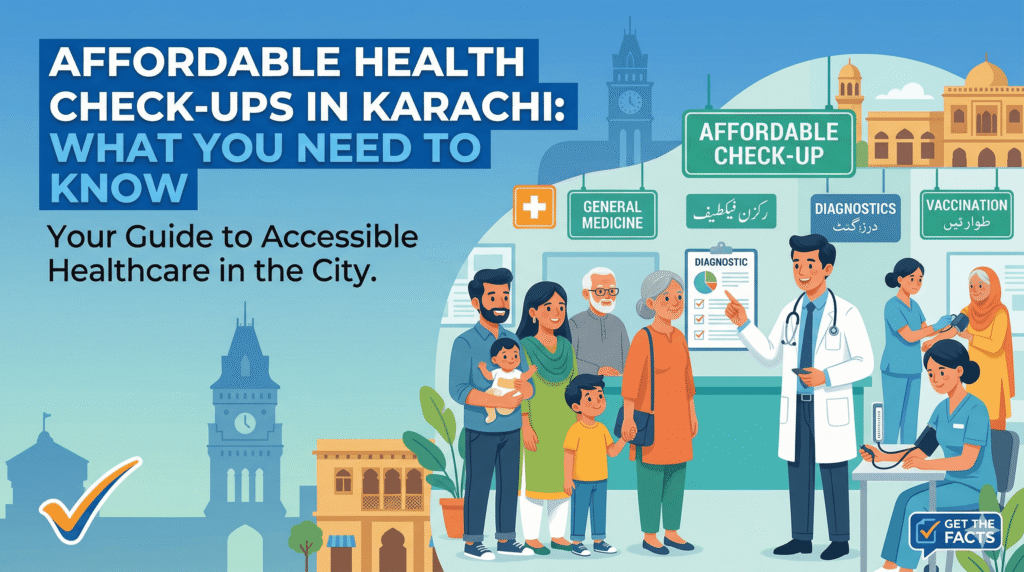
Let’s talk about a problem most people in Karachi have experienced personally.
You’re not feeling well. Maybe you’ve had a nagging cough for two weeks. Your knees have been aching. You’re more tired than usual. Or perhaps you haven’t had a checkup in years and you know — in the back of your mind — that you should go.
So you look into it. And you quickly discover that a basic consultation at a private clinic costs Rs. 1,500–3,000. Blood tests are extra. Medicines are extra. And if you need a specialist? Add another Rs. 3,000–5,000.
For a family living on Rs. 30,000–40,000 per month — which describes the majority of Karachi’s population — this is simply not accessible. So you wait. You delay. You hope it gets better on its own.
Sometimes it does. Often it doesn’t.
This article is a complete, practical guide to getting affordable health check-ups in Karachi — what’s available, where to go, what to expect, and how ZMT’s network of 45 clinics has made quality healthcare accessible to hundreds of thousands of patients who couldn’t afford it elsewhere.
We’ll also explain how Zakat and Sadaqah from donors across Pakistan and the world makes all of this possible.
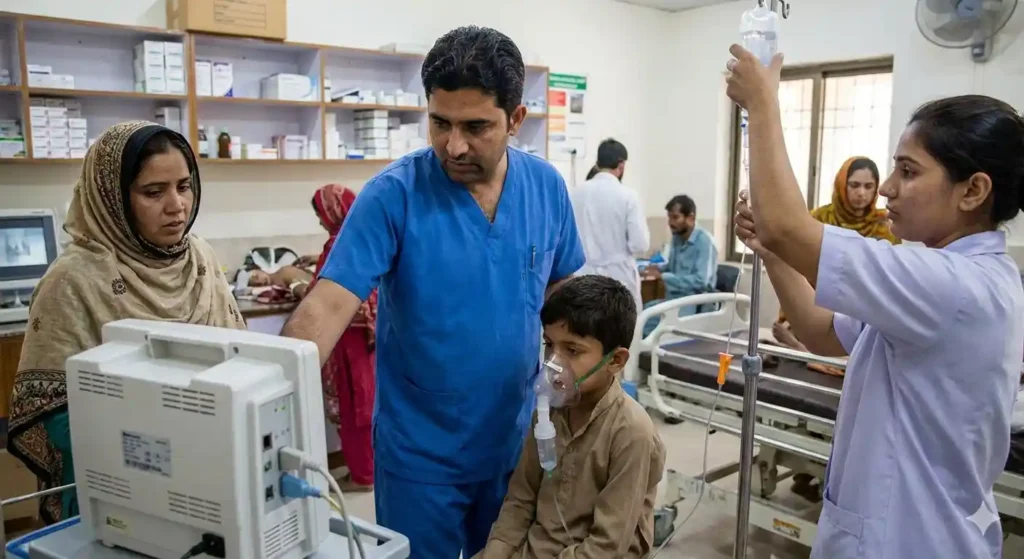
The Reality of Healthcare Costs in Karachi
Before we get to solutions, let’s be honest about the problem.
Karachi is home to some of the finest private hospitals in Pakistan — Aga Khan University Hospital, South City Hospital, Liaquat National, and dozens of specialist centers. These facilities offer world-class care.
For those who can afford them.
For the other 60–70% of Karachi’s population — the residents of Orangi Town, Korangi, Baldia, Lyari, Malir, and dozens of other densely populated neighborhoods — the healthcare landscape looks very different.
The cost breakdown at private clinics:
| Service | Typical Private Clinic Cost |
| GP consultation | Rs. 1,500 – 3,000 |
| Specialist consultation | Rs. 3,000 – 7,000 |
| Complete Blood Count (CBC) | Rs. 400 – 800 |
| Blood glucose test | Rs. 200 – 500 |
| Hepatitis C screening | Rs. 800 – 1,500 |
| X-ray | Rs. 1,000 – 2,500 |
| Ultrasound (basic) | Rs. 2,000 – 5,000 |
| Dental consultation | Rs. 1,000 – 3,000 |
| Monthly blood pressure medication | Rs. 500 – 2,000 |
A basic sick visit with one or two tests can easily cost Rs. 3,000–5,000 before medicines. For a family where the breadwinner earns Rs. 1,000–1,500 per day, this represents 2–5 days of income.
The result? People don’t go. They postpone. They self-medicate with whatever the local pharmacy suggests. And conditions that should have been manageable become crises.
This is Karachi’s healthcare affordability problem. And it’s killing people.
What Makes a Health Check-Up “Affordable”?
Affordability in healthcare is not just about price. It’s about the total cost and burden of accessing care:
1. Financial cost: What does the consultation, tests, and medication actually cost?
2. Time cost: How long do you have to wait? How far do you have to travel? Is this possible on a workday?
3. Dignity cost: Are you treated with respect regardless of your income? Or do you feel like a burden?
4. Language and cultural cost: Is the provider able to communicate with you effectively? Do they understand your context?
5. Reliability: Can you count on this service being there next week, next month, next year?
ZMT’s model of affordability addresses all five dimensions — not just the price tag.
ZMT Clinics: The Most Affordable Comprehensive Healthcare in Karachi
ZMT Primary Healthcare Network operates 45 clinics across Karachi’s underserved communities. The cost structure at ZMT is designed specifically for patients with limited means.
Consultation fee: Nominal (a fraction of private clinic costs), waived entirely for patients who cannot afford even the nominal fee.
Laboratory tests: Provided at heavily subsidized rates or free for eligible patients.
Medicines: Free of charge through ZMT’s pharmacy program — no prescription should go unfilled due to cost.
Specialty programs (Hepatitis C treatment, malnutrition, physiotherapy, mental health, eye care): All free of charge.
This is possible because ZMT operates as a not-for-profit organization funded primarily by Zakat, Sadaqah, and charitable donations from individuals and corporations.
To understand the full scope of services available, read our Comprehensive Guide to ZMT Primary Healthcare Services.
What Check-Ups Are Available at ZMT?
Basic Health Check-Up Package
Every patient who visits a ZMT clinic receives a basic assessment that includes:
- Vital signs: Blood pressure, pulse, temperature, weight, height, BMI
- Chief complaint consultation: A qualified physician listens to your concerns and conducts a targeted examination
- Prescription: Medicines prescribed and dispensed free of charge through the in-clinic pharmacy
- Counseling: Lifestyle, nutrition, and health education as appropriate
This alone — a complete consultation with medicines included — would cost Rs. 2,000–4,000+ at a private clinic. At ZMT, it is accessible at a nominal fee or free.
Women’s Health Package
ZMT specializes in women’s health. Services specifically for women include:
- Antenatal care consultations (all three trimesters)
- Postnatal care
- Family planning counseling
- Gynecological consultations for common conditions
- Anemia screening and management (critical for women in their reproductive years)
- Hepatitis B and C screening
Child Health Check-Up
For children, ZMT provides:
- Growth monitoring (weight, height, MUAC for malnutrition assessment)
- Developmental milestone assessment
- Vaccination status review and immunization
- Nutritional counseling for caregivers
- Management of common childhood illnesses
Chronic Disease Monitoring Package
For patients with known chronic conditions (hypertension, diabetes, asthma), ZMT provides:
- Regular follow-up consultations
- Monitoring tests (blood glucose, HbA1c, urinalysis)
- Medication review and adjustment
- Lifestyle counseling
- Complication screening
This is particularly valuable because managing chronic diseases requires consistent follow-up — something that patients who pay per-visit at private clinics often skip due to cost.
The Hidden Costs of Delaying Healthcare — And Why ZMT Prevents Them
People often delay healthcare because they’re trying to save money. But this logic is tragically backward.
Let’s do the math:
Undetected hypertension that leads to a stroke: – Monthly BP medication at ZMT: ~Rs. 500 (covered by ZMT pharmacy) – Cost of stroke treatment and rehabilitation: Rs. 500,000 – 2,000,000+
Undetected pre-diabetes that progresses to Type 2 diabetes with renal failure: – Annual diabetes check-up and medication at ZMT: Free to minimal cost – Monthly dialysis for kidney failure: Rs. 30,000 – 50,000 indefinitely
Undetected Hepatitis C leading to liver cirrhosis: – Hepatitis C treatment at ZMT: Free – Liver transplant (often the only option at end-stage): Rs. 5,000,000+
The message is stark: the cheapest healthcare decision you will ever make is the one you make early.
ZMT makes early healthcare possible for those who couldn’t otherwise afford it — and the savings to families, communities, and the broader healthcare system are enormous.
For more on the power of early detection, read How Our General Health Check-Ups Save Lives and Why Regular Health Screenings Are Essential in Karachi.
Other Affordable Healthcare Options in Karachi
ZMT is the most comprehensive free primary healthcare network in Karachi, but it’s useful to know the full landscape:
Government Health Facilities: – Government dispensaries and basic health units (BHUs) offer subsidized care — but are often understaffed, underfunded, and lack reliable medicine supplies. – Government hospitals (Jinnah, Civil, Lyari General) offer free secondary and tertiary care but face extreme overcrowding.
Charitable Dispensaries: – Various charity organizations run dispensaries in specific neighborhoods — often with limited hours and narrow service scope.
Edhi Foundation: – Provides basic medical care and has a wide network, primarily focused on emergency services and social welfare.
ZMT Clinics (Recommended): – 45 locations across Karachi’s underserved areas – Comprehensive primary healthcare including diagnostics, medicines, and specialty programs – Consistent quality, trained staff, and a systematic approach to patient care – The most comprehensive free/near-free primary care network in the city
How to Access Affordable Check-Ups at ZMT
Getting a health check-up at ZMT is simple:
Step 1: Find your nearest clinic ZMT has 45 clinics spread across Karachi’s underserved communities — in Orangi Town, Korangi, Baldia, Malir, Landhi, Lyari, and many other neighborhoods. Contact ZMT at info@zmtclinics.org or call +92 323 2115770 to find the nearest location.
Step 2: Visit during operating hours Clinics are open from 9am – 5pm. No appointment is needed for general consultations and check-ups.
Step 3: Register at reception Bring your CNIC or any identification. If you don’t have ID, you will still be seen. No patient is turned away.
Step 4: Tell your doctor everything The consultation is most valuable when you’re honest about your symptoms, health history, and lifestyle. ZMT’s doctors are trained to listen without judgment.
Step 5: Collect your medicines and follow-up plan Your prescription medicines are dispensed from the on-site pharmacy. Any recommended tests are conducted at the clinic or arranged at subsidized rates. Follow-up visits are scheduled if needed.
For first-time visitors, our detailed guide What to Expect During Your First Visit to a ZMT Clinic walks you through the entire experience.
Infographic: ZMT vs. Private Clinic — Cost Comparison
[Suggested infographic: Side-by-side cost comparison table. ZMT column shows Rs. 0–100 (or free) for consultation, free for medicines, subsidized for tests. Private Clinic column shows Rs. 1,500–3,000 for consultation, Rs. 500–2,000 for medicines separately, Rs. 400–1,500 per test. Total per visit ZMT: Rs. 0–500. Total per visit private clinic: Rs. 3,000–8,000.]
The Role of Donors in Making Affordability Possible
Here’s the honest story behind every affordable check-up at ZMT.
The consultation you receive for free was paid for by someone’s Zakat. The blood pressure medication you take home was funded by someone’s Sadaqah. The laboratory test that detected your hepatitis was made possible by someone’s charitable donation.
ZMT does not receive significant government funding. It does not charge commercial rates. It exists and runs because thousands of donors — individuals, families, and corporations — direct their Zakat, Sadaqah, and voluntary charity to support its mission.
For donors: When you give Zakat to ZMT, you are enabling specific acts of care: – A single Rs. 350 donation funds one patient consultation – Rs. 1,000 covers the basic diagnostic tests for one patient – Rs. 5,000 vaccinates ten children – Rs. 10,000 funds one month of Hepatitis C treatment for one patient
ZMT is fully Zakat-eligible, operating with Islamic financial compliance and transparency. Every donation is documented and allocated directly to patient benefit.
Healthcare charity is Sadaqah Jariyah of the highest order. The patient whose diabetes is caught early and managed — because your Zakat paid for their check-up — lives a longer, healthier life. The ripple effects extend to their family, their community, and their future.
To donate, visit zmtclinics.org.
Final Thoughts
Affordable health check-ups in Karachi exist — but they require knowing where to look.
ZMT has spent more than a decade building the answer to this question in Karachi’s most underserved communities: a network of accessible, comprehensive, dignified primary healthcare clinics that treat every patient as deserving of quality care — regardless of income.
No one in Karachi should avoid a health check-up because of cost. With ZMT, that barrier has been removed for hundreds of thousands of patients.
If you need a check-up — come to ZMT. Walk in. You will be seen, heard, and cared for.
If you want to make this possible for more people — donate your Zakat or Sadaqah at zmtclinics.org.
Because healthcare is not a luxury. And in Karachi, ZMT is proving that every day.
ZMT Primary Healthcare Network — Quality primary healthcare for every woman and child in Pakistan. Donate your Zakat and Sadaqah at zmtclinics.org
