
By ZMT Primary Healthcare Network | zmtclinics.org
Let me be direct with you.
Most people in Karachi’s underserved communities don’t lack the desire to stay healthy — they lack access to affordable, dignified healthcare. They skip doctor visits. They delay diagnoses. They wait until a manageable condition becomes a crisis.
ZMT Clinics was built to fix exactly that.
In this comprehensive guide, we’re pulling back the curtain on every service ZMT offers — from general consultations to specialized free programs — so you know exactly what’s available, who it’s for, and how to access it. Whether you’re a patient, a donor, or someone considering giving your Zakat or Sadaqah to a worthy cause, this guide is for you.
What Is ZMT and Why Does It Exist?
Zubaida Machiyara Trust (ZMT) is Karachi’s largest primary healthcare network, operating 45 clinics across the city’s most underserved neighborhoods. It was founded by Dr. Amanullah Kassim Machiyara in memory of his mother, Zubaida Kassim — a woman of deep compassion who passed away prematurely due to illness.
Witnessing how financial barriers denied ordinary families even the most basic medical care, Dr. Machiyara set out to build something different: a healthcare network rooted in faith, driven by compassion, and sustained by community generosity — primarily through Zakat, Sadaqah, and charitable donations.
“No one should be denied healthcare because of their financial situation.” — ZMT’s founding philosophy
Today, ZMT has served over 13 million patients. Every single clinic is strategically located in the slums and densely populated suburbs of Karachi — precisely where the need is greatest and existing healthcare infrastructure is weakest.
To understand why this matters, read our foundational post: The Importance of Primary Healthcare for Karachi’s Underserved Communities.
The ZMT Service Model: Primary Healthcare Done Right
ZMT operates on the principle that primary healthcare is the first and most critical layer of any functioning health system. As we explained in What Is Primary Healthcare and How Does It Differ From Tertiary Care?, primary care handles 80–90% of all health needs — and when it’s accessible and affordable, it prevents the expensive tertiary care crises that bankrupt families.
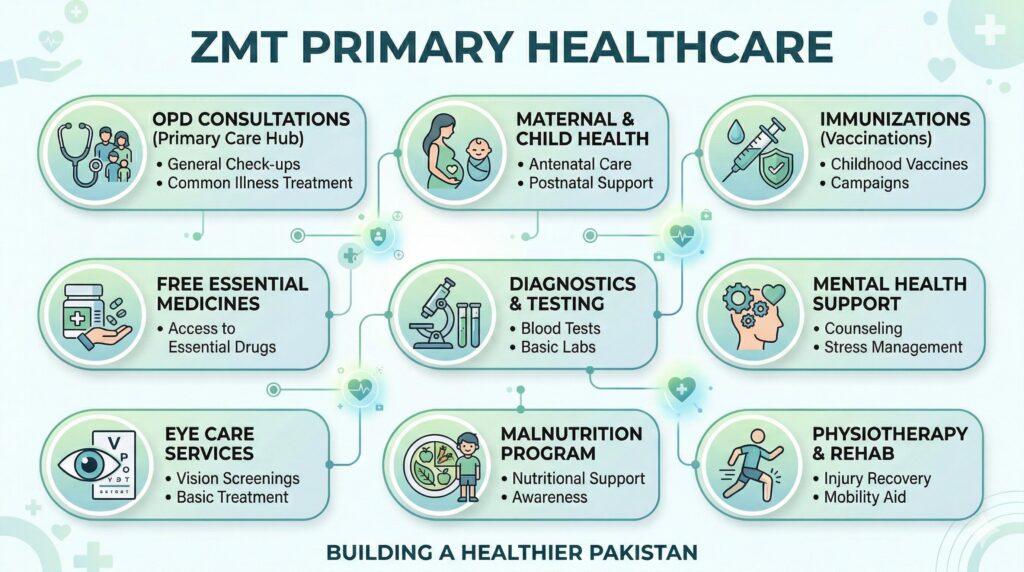
Here’s a full breakdown of ZMT’s services:
1. General Outpatient Consultations (OPD)
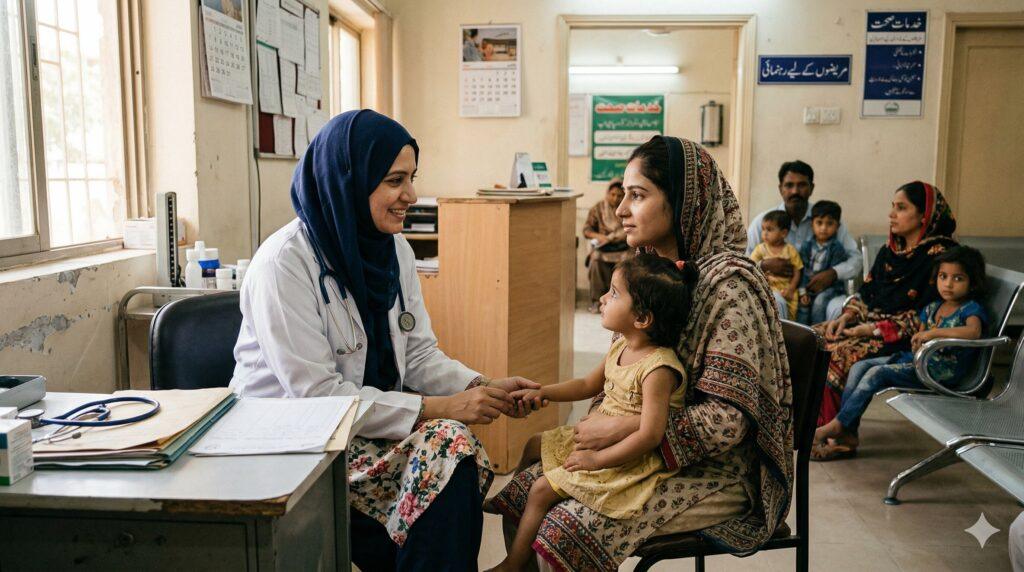
The backbone of every ZMT clinic is its outpatient department. Patients of all ages — though with special focus on women and children — can walk in and be seen by a qualified physician for a wide range of conditions:
- Fever, infections, and flu
- Respiratory illnesses (asthma, bronchitis, pneumonia)
- Gastrointestinal issues (diarrhea, vomiting, gastritis)
- Skin conditions and dermatological complaints
- General pain management
- Hypertension and diabetes monitoring
- Pediatric consultations
Infographic Note: Studies show that in Pakistan, over 70% of hospital admissions could have been prevented with timely primary care access. ZMT’s OPD model is designed to catch and treat conditions before they escalate.
No appointment necessary at most clinics. Patients are seen on a first-come, first-served basis, and consultation fees are kept at a nominal level — or waived entirely for patients who cannot afford them.
2. Maternal and Child Health (MCH) Services
ZMT places maternal and child health at the center of its mission. Why? Because investing in the health of mothers and children creates the highest return on community wellbeing.
Services include:
- Antenatal care (ANC): Regular prenatal checkups for expecting mothers — monitoring fetal growth, blood pressure, hemoglobin levels, and risk factors for complicated delivery.
- Postnatal care: Follow-up for new mothers and newborns in the critical 6-week window post-delivery.
- Child health monitoring: Growth tracking for infants and toddlers, developmental assessments, and early identification of malnutrition or developmental delays.
- Family planning counseling: Respectful, evidence-based guidance on birth spacing and contraception options.
Pakistan has one of the highest maternal mortality rates in Asia. ZMT’s maternal health program is a direct response to this reality — and every Rupee donated to ZMT through Zakat or Sadaqah helps fund these life-saving checkups.
3. Immunization / Vaccination Program
Vaccines are one of the most cost-effective public health interventions in history. Yet in Karachi’s informal settlements, vaccination rates remain dangerously low — leaving communities vulnerable to preventable diseases like measles, polio, typhoid, and hepatitis.
ZMT’s vaccination program provides:
- EPI (Expanded Programme on Immunization) vaccines for children under 5
- Hepatitis B vaccination
- Typhoid vaccines
- Tetanus toxoid for pregnant women
The program is completely free of charge, made possible entirely through donor generosity. When you direct your Zakat or Sadaqah to ZMT, you are literally preventing children from dying of diseases that the rest of the world has already beaten.
4. Pharmacy: Free Medicines Program
Here’s a reality most people don’t know: in Pakistan, a large percentage of patients who receive a diagnosis never fill their prescription — because they simply cannot afford the medicines.
ZMT’s in-clinic pharmacy program bridges this gap by providing essential medicines free of charge to eligible patients. The pharmacy stocks:
- Antibiotics, antiparasitic, and antifungal medications
- Fever reducers and analgesics
- Blood pressure and diabetes medications
- Vitamins and nutritional supplements
- Pediatric formulations
This program is 100% donor-funded. When someone gives Sadaqah Jariyah (ongoing charity) to ZMT, their contribution quite literally keeps medicines on shelves that save lives every single day.
5. Diagnostic Laboratory Services
Diagnosis without testing is guesswork. Yet laboratory tests remain one of the biggest financial barriers for low-income patients in Karachi. A basic CBC (Complete Blood Count) that costs Rs. 300–500 can represent a full day’s wage for a daily laborer.
ZMT clinics offer essential diagnostic services at minimal or no cost:
- Complete Blood Count (CBC)
- Blood glucose and HbA1c (for diabetes management)
- Urine analysis
- Liver function tests
- Hepatitis B and C screening
- Pregnancy tests
- Sputum tests for TB screening
These tests save lives. A mother whose gestational diabetes goes undetected faces enormous risks. A child whose hemoglobin level is critically low but untested suffers silently. Your donation enables ZMT to run these tests for free.
For more details on how regular screenings save lives, see our dedicated post: How Our General Health Check-Ups Save Lives.
6. Hepatitis C Treatment Program
Pakistan has one of the highest burdens of Hepatitis C in the world — and the vast majority of infected individuals in low-income communities remain undiagnosed and untreated. Untreated Hepatitis C leads to liver cirrhosis, liver cancer, and death.
ZMT’s Hepatitis C Program is one of the most impactful things the organization does:
- Free screening for Hepatitis C antibodies
- Confirmation testing for reactive cases
- Full treatment with Direct Acting Antivirals (DAAs)
- Follow-up and monitoring throughout the treatment cycle
The cure rate for Hepatitis C with modern DAAs exceeds 95%. ZMT is delivering this cure to people who would otherwise never access it. This is Zakat in its most powerful form — not just alleviating suffering today, but eliminating a disease that would destroy lives for years to come.
7. Mental Health Program
Mental health is the most neglected dimension of healthcare in Pakistan. Conditions like depression, anxiety, PTSD, and psychosis affect millions — but stigma, lack of awareness, and prohibitive costs keep most people from ever seeking help.
ZMT’s mental health program provides:
- Psychiatric consultations
- Counseling and psychological support
- Medication management for psychiatric conditions
- Community awareness and destigmatization sessions
For communities that have endured poverty, displacement, domestic violence, and chronic stress — mental health support is not a luxury. It is a necessity. ZMT is one of very few organizations providing this service free of charge in Karachi’s underserved areas.
8. Physiotherapy Program
Disability and chronic musculoskeletal pain disproportionately affect working-class communities — daily laborers, construction workers, domestic workers, and others whose livelihoods depend on their physical ability. Without physiotherapy, a sprained back can become a permanent disability. A stroke can rob someone of their ability to walk.
ZMT’s physiotherapy program offers:
- Post-stroke rehabilitation
- Management of orthopedic injuries
- Chronic back and neck pain treatment
- Post-surgical rehabilitation
- Neurological rehabilitation
Read the inspiring patient story on ZMT Physiotherapy Clinic in Karachi to understand the real human impact of this program.
9. Eye Care Program
Uncorrected vision problems are among the most common yet preventable causes of lost productivity and reduced quality of life in Pakistan. Children who cannot see the blackboard fall behind in school. Adults who cannot see clearly cannot work effectively.
ZMT’s Eye Program provides:
- Vision screening and refraction testing
- Prescription eyeglasses (subsidized or free)
- Diagnosis of conditions like cataracts, glaucoma, and diabetic retinopathy
- Referrals for surgical intervention where needed
10. Malnutrition Program
Launched in February 2022, ZMT’s Malnutrition Program targets one of the most heartbreaking health crises in Karachi: childhood malnutrition.
The program focuses on children aged 6 months to 5 years and includes:
- Nutritional screening using MUAC (mid-upper arm circumference) measurement
- Diagnosis of acute and chronic malnutrition
- Provision of therapeutic and supplementary feeding products
- Caregiver education on nutrition and feeding practices
- Follow-up to track recovery
Malnutrition in early childhood causes permanent cognitive impairment, stunted growth, and weakened immunity — affecting a child’s entire life trajectory. ZMT’s intervention at this stage is genuinely life-altering.
11. Patient Awareness Program
ZMT doesn’t just treat illness — it prevents it through education. The Patient Awareness Program conducts regular sessions at clinics on:
- Hygiene and sanitation
- Disease prevention
- Diabetes and hypertension management
- Maternal and child health practices
- Mental health awareness
An educated patient is a healthier patient. This program multiplies the impact of every clinical intervention.
12. Continued Medical Education (CME)
Quality healthcare requires continuously updated knowledge. ZMT invests in its doctors and paramedical staff through regular webinars, lectures, and workshops — ensuring that the care delivered in its clinics reflects current best practices.
This internal investment in quality is a hallmark of a genuinely trustworthy organization.
The Role of Zakat and Sadaqah in Powering These Services
Here’s the honest truth: none of this would exist without donors.
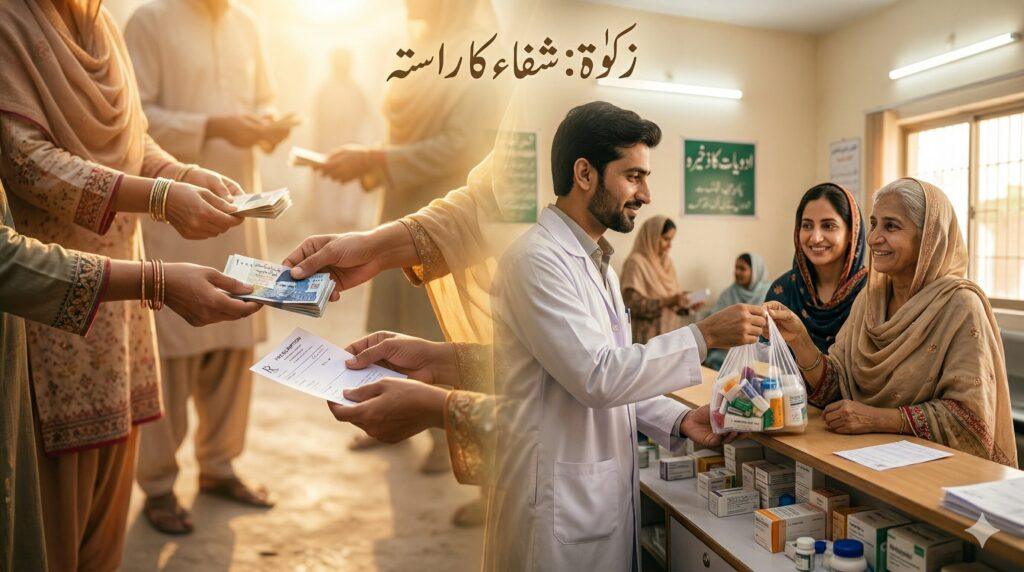
ZMT is a not-for-profit organization that sustains itself entirely through the generosity of individual and corporate donors. The services described above — consultations, medicines, laboratory tests, vaccines, treatment programs — are all funded by Zakat, Sadaqah, and voluntary contributions.
ZMT is a Zakat-eligible organization. All Zakat funds are used exclusively for the benefit of eligible patients — in full compliance with Islamic principles. When you direct your Zakat to ZMT, you are fulfilling a religious obligation while saving lives.
Consider the impact of your giving:
| Your Contribution | Real-World Impact |
| Rs. 350 | One patient consultation |
| Rs. 1,000 | Basic diagnostic tests for a patient |
| Rs. 2,500 | A month of blood pressure medication for one patient |
| Rs. 5,000 | Vaccination for 10 children |
| Rs. 10,000 | One month’s supply of Hepatitis C treatment |
Healthcare is one of the most powerful forms of Sadaqah Jariyah — ongoing charity. When you fund a child’s vaccination, you prevent disease not just in that child but in their future children. When you fund a mother’s antenatal care, you protect both her life and her baby’s life.
How to Access ZMT Clinic Services
Already explored How ZMT Clinics Offer Affordable Healthcare in Karachi and What to Expect During Your First Visit to a ZMT Clinic? Then you know the process is simple.
For new patients: just walk into the nearest ZMT clinic during operating hours (9am–5pm). No prior appointment is required for most services. Bring your CNIC or any identification, and inform the reception staff of your concern.
ZMT has 45 clinics located across Karachi’s underserved communities — chances are, there’s one near you.
Contact: info@zmtclinics.org | Office: FL-6/6, Block 4, Gulshan-e-Iqbal, Karachi
Final Thoughts
ZMT’s service portfolio is comprehensive, carefully designed, and genuinely impactful. From the moment a patient walks through the door to the moment they leave with medicines, test results, and a treatment plan — the entire system is built around one principle: you deserve healthcare regardless of your income.
If you’re a patient — you’re welcome at ZMT.
If you’re a donor considering where to direct your Zakat, Sadaqah, or charitable giving — ZMT is one of the most accountable, transparent, and impactful healthcare charities in Pakistan.
And if you’re simply curious about primary healthcare and what it means for communities like Karachi’s — keep reading our blog. We’re building a library of resources to help everyone understand, access, and support quality primary care.
Explore more about why regular health screenings matter →
ZMT Primary Healthcare Network — Quality primary healthcare for every woman and child in Pakistan. Donate your Zakat and Sadaqah at zmtclinics.org
