
Two of the deadliest health threats in Pakistan cause almost no symptoms until it is too late.
Diabetes and high blood pressure, also called hypertension, are often called silent killers for exactly this reason. A person can have either condition for years without knowing it, while quietly, inside their body, the damage accumulates. Damage to the heart. Damage to the kidneys. Damage to the eyes. Damage to the blood vessels.
By the time obvious symptoms appear, the disease has often already caused serious, sometimes irreversible harm.
The good news is that both conditions can be detected with a simple, quick test, and both can be managed effectively once diagnosed. In Karachi, this screening is available completely free at ZMT clinics.
This guide explains what these conditions are, who is at risk, the warning signs to watch for, and why a free screening could be one of the most important things you do for your health.
The Growing Crisis of Non-Communicable Diseases
For a long time, health efforts in Pakistan focused mainly on infectious diseases. But a quieter epidemic has been growing. Non-communicable diseases, led by diabetes and high blood pressure, now affect a huge and rising share of the population.
Pakistan has one of the highest rates of diabetes in the world. Millions of Pakistanis are living with the condition, and many more have it without knowing. High blood pressure is similarly widespread, affecting a large proportion of adults.
These conditions are driven by a combination of factors, including diet, physical inactivity, obesity, stress, and genetics. As lifestyles change and cities grow, the burden continues to rise.
The critical point is this. These diseases are manageable when caught early, and dangerous when left undetected. Screening is the bridge between those two outcomes.
Understanding Diabetes
Diabetes is a condition where the body cannot properly regulate blood sugar levels. Over time, high blood sugar damages blood vessels and organs throughout the body.
There are two main types.
Type 1 diabetes is when the body does not produce insulin. It usually appears in childhood or early adulthood and requires insulin treatment.
Type 2 diabetes is the most common form. It develops when the body cannot use insulin effectively. It is strongly linked to lifestyle factors and usually appears in adults, though it is increasingly seen in younger people.
Left unmanaged, diabetes can lead to serious complications, including heart disease, kidney failure, nerve damage, vision loss and blindness, and poor wound healing that can lead to amputation.
Warning Signs of Diabetes
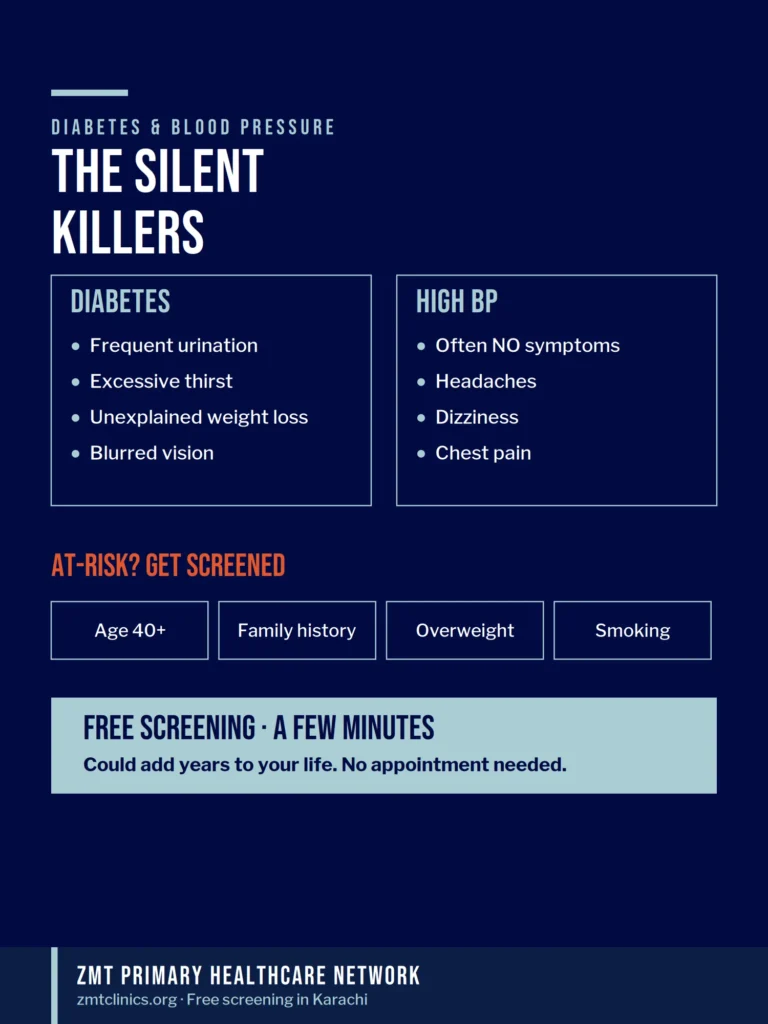
- Frequent urination, especially at night
- Excessive thirst
- Unexplained weight loss
- Constant hunger
- Fatigue and weakness
- Blurred vision
- Slow-healing wounds or frequent infections
- Tingling or numbness in the hands or feet
Many people with type 2 diabetes have no symptoms in the early stages, which is why screening is essential even if you feel healthy.
Understanding High Blood Pressure
Blood pressure is the force of blood pushing against the walls of your arteries. When this pressure stays too high over time, it damages the arteries and forces the heart to work harder.
High blood pressure is especially dangerous because it usually causes no symptoms at all. A person can have dangerously high blood pressure and feel completely fine, right up until it causes a heart attack, stroke, or kidney failure.
Untreated high blood pressure can lead to:
- Heart attack and heart failure
- Stroke
- Kidney damage and failure
- Vision loss
- Aneurysms
Warning Signs of High Blood Pressure
Most people have no symptoms. When symptoms do appear, usually at very high levels, they can include:
- Headaches
- Dizziness
- Blurred vision
- Chest pain
- Shortness of breath
- Nosebleeds
Because symptoms are usually absent, the only reliable way to know your blood pressure is to have it measured. This takes less than a minute and is completely painless.
Who Is at Risk?
Certain factors raise your risk of diabetes and high blood pressure. If any of these apply to you, screening is especially important.
- Being over 40 years old
- A family history of diabetes or high blood pressure
- Being overweight or obese
- A sedentary lifestyle with little physical activity
- A diet high in sugar, salt, and processed food
- Smoking
- High stress levels
- For women, a history of gestational diabetes during pregnancy
The reality is that in Pakistan, given the high prevalence of these conditions, almost every adult would benefit from regular screening, regardless of whether they have obvious risk factors.
Why Screening Changes Everything
Here is the simple truth. You cannot manage a condition you do not know you have.
Screening for diabetes and high blood pressure is quick, simple, and painless. A blood sugar test and a blood pressure measurement take just a few minutes. Yet those few minutes can reveal a condition that, caught early, can be managed to prevent devastating complications.
When diabetes is caught early, lifestyle changes and treatment can keep blood sugar under control and prevent complications. When high blood pressure is caught early, it can be managed with lifestyle changes and, if needed, medication, dramatically reducing the risk of heart attack, stroke, and kidney failure.
Caught late, these conditions cause irreversible harm. Caught early, they can be lived with, managed, and controlled. Screening is what makes the difference.
For more on the value of regular health checks, read our guide on why regular health screenings are essential in Karachi.
Managing Diabetes and Blood Pressure
If screening reveals that you have diabetes or high blood pressure, it is not a death sentence. Both conditions can be managed effectively, allowing you to live a full and healthy life.
Management typically involves:
Lifestyle changes. A healthier diet, reduced salt and sugar, regular physical activity, weight management, quitting smoking, and managing stress all make a major difference.
Regular monitoring. Keeping track of your blood sugar or blood pressure helps you and your healthcare provider manage the condition.
Medication where needed. Some people need medication to control their condition. Taken consistently, these medicines are highly effective.
Ongoing care. Regular check-ups allow your condition to be monitored and your treatment adjusted as needed.
ZMT clinics provide consultations, monitoring, and free medicines to help patients manage these conditions. The support does not end at diagnosis. It continues through ongoing care.
Where to Get Free Screening in Karachi
ZMT Clinics provide free screening for diabetes and high blood pressure across 45 clinics in Karachi’s underserved communities.
Screening includes:
- Free blood sugar testing
- Free blood pressure measurement
- Consultation with a qualified doctor
- Guidance on managing your risk
- Follow-up care and free medicines for those diagnosed
To get screened, find your nearest clinic on the Karachi Wellness Map and walk in during operating hours. No appointment is needed. The screening is quick, and it is free.
If you are over 40, or if you have any risk factors, or if you simply have not had a check in a while, please get screened. It could be the most important few minutes you spend on your health this year.
How Free Screening Is Funded
Free screening, consultations, and medicines are funded by Zakat, Sadaqah, and charitable donations. Non-communicable diseases like diabetes and high blood pressure affect enormous numbers of people, and free screening programs save lives by catching these conditions early.
When you donate, you help fund the screenings that catch these silent killers before they cause irreversible harm, and the ongoing care that helps patients manage their conditions.
To support this work, visit the donation page. Funding preventive healthcare is a powerful form of Sadaqah, because it stops disease before it destroys lives.
Frequently Asked Questions
Is diabetes and blood pressure screening at ZMT really free? Yes. Screening, consultation, and follow-up care including medicines are provided free to eligible patients.
How often should I get screened? If you are over 40 or have risk factors, at least once a year. Your doctor can advise based on your situation.
Does screening hurt? No. Blood pressure measurement is painless, and blood sugar testing involves only a quick finger-prick.
Can these conditions be cured? They are usually managed rather than cured. With proper management, people live full, healthy lives and avoid complications.
I feel healthy. Do I still need screening? Yes. Both conditions often have no symptoms in the early stages. Feeling healthy does not mean you are not at risk.
What if I am diagnosed? ZMT provides ongoing care, monitoring, and free medicines to help you manage your condition.
Final Word
Diabetes and high blood pressure are silent, common, and dangerous. But they are also detectable and manageable. The only thing standing between you and early detection is a simple, free screening that takes just a few minutes.
Do not wait for symptoms. With these conditions, symptoms often mean the damage is already done. Get screened, know your numbers, and take control of your health.
Visit your nearest ZMT clinic today, or learn more at zmtclinics.org. And if you would like to help others access life-saving screening, visit the donation page.
A few minutes today could add years to your life. Get screened.
This article is for general health awareness and does not replace professional medical advice. If you have concerns about your health, consult a doctor.
ZMT Primary Healthcare Network. Quality primary healthcare for every woman and child in Pakistan.
