Give sadqa online to ZMT Primary Healthcare Network and it pays for medicines, tests and treatment for patients at 33 clinics across Karachi. Sadaqah has no minimum, no nisab and no fixed date, so every gift reaches someone waiting to see a doctor.

Sadaqah is voluntary charity, given at any time, in any amount, to anyone in need. Zakat is a fixed obligation of 2.5% on wealth above the nisab, paid once a lunar year to the eight groups the Quran names. Because sadaqah has fewer conditions, it can pay for things zakat usually cannot, such as clinic equipment and running costs.
In Pakistan the word is spelled many ways, sadqa, sadqah, sadaqa and sadaqah, and all of them mean the same thing. What matters is the intention: a gift given for the sake of Allah, with nothing expected in return. The Prophet, peace be upon him, said that charity does not decrease wealth, a hadith recorded in Sahih Muslim (2588).
| Question | Zakat | Sadaqah |
|---|---|---|
| Required? | Yes, for every adult Muslim with wealth above the nisab | No, it is voluntary |
| How much? | 2.5% of zakatable wealth | Any amount, with no minimum |
| When? | Once each lunar year, on your zakat date | Any day, as often as you like |
| Who can receive it? | The eight categories in Surah At-Tawbah 9:60 | Anyone in need, and good causes in general |
| At ZMT it funds | Treatment for screened, eligible patients | Treatment, medicines, equipment and clinic running costs |
| ZMT account | Zakat account ending 2330 | General account ending 2322 |
If you are paying your annual obligation rather than a voluntary gift, use the zakat account instead; the ZMT zakat page explains eligibility and the nisab.
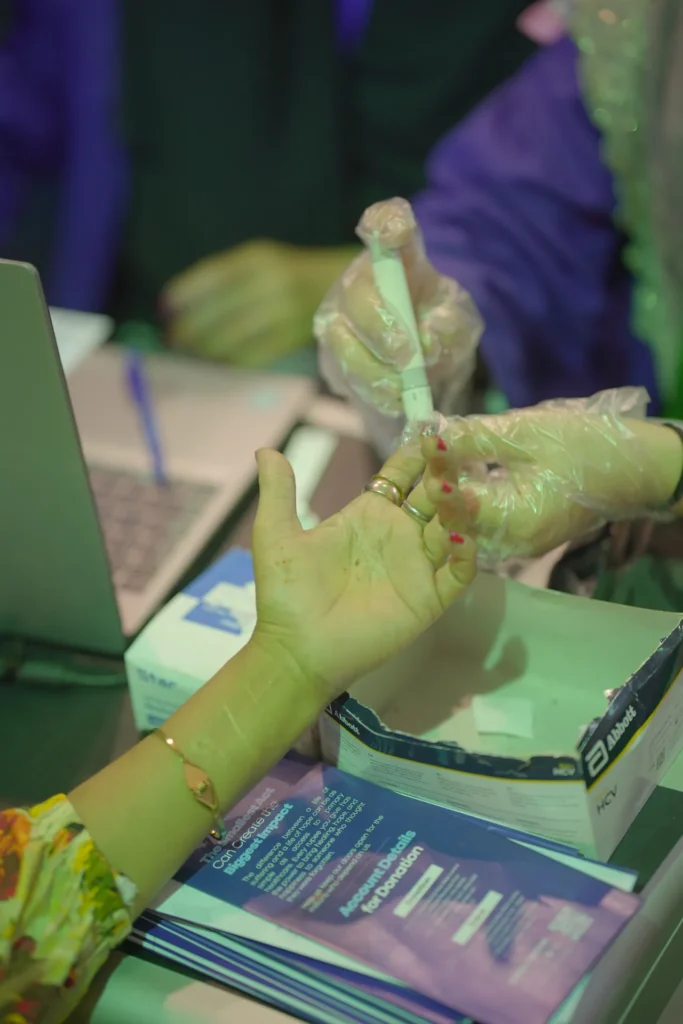
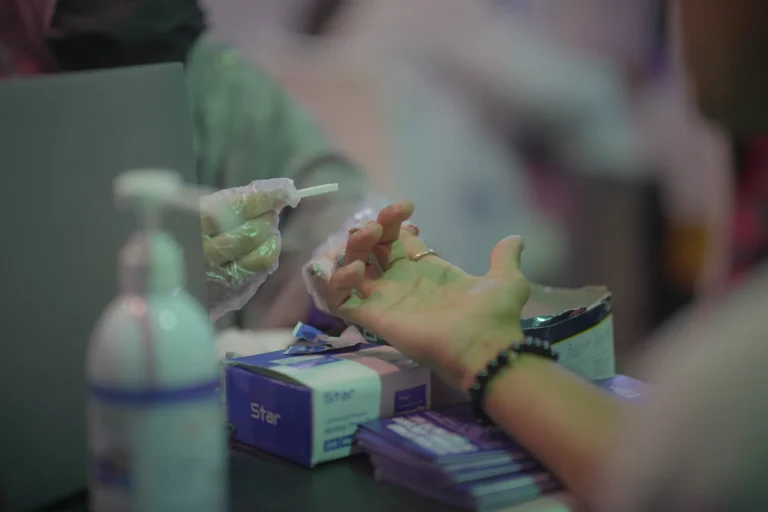
Sadqa online at ZMT pays for specific, costed pieces of patient care. These are the unit costs ZMT publishes on its programme pages and homepage, so you can match a gift to a treatment. Small, regular amounts add up: Rs 250 a week for a year pays for 52 hepatitis C screenings.
Give Sadaqah
Yes. Many families give sadqa when someone they love falls ill, asking Allah for mercy and for the patient's recovery. When that sadqa goes to a clinic, the same gift pays for another patient's treatment, so the prayer for one person becomes care for another.
Giving sadaqah for health, your own or a relative's, is a long-standing practice in Pakistani families. You can give on behalf of the person who is unwell, or they can give themselves. Write their name in the payment reference and in the donation form if you would like your records to show who the sadaqah was for. There is no set amount. You might give the cost of one consultation for each day of the illness, or a single larger gift.
Giving for a patient makes sense at a primary healthcare clinic. ZMT's vision is quality primary healthcare for every woman and child, and its mission is to reach underprivileged women and children in the suburbs of Karachi, families for whom a Rs 350 consultation with medicines can be the difference between treatment now and a hospital visit later.
Sadaqah given for a parent or relative who has died is a separate, well established practice. If you want the reward to continue, choose a gift whose benefit lasts, such as a vaccination drive or a clinic's running costs. The page on sadaqah jariyah in healthcare sets out the options.
You give sadqa online to ZMT by bank transfer to the general donation account, then upload the transfer receipt on the donation page so ZMT can email an e-receipt. It works from any Pakistani banking app, and from abroad by international transfer.
Any amount is accepted. Use the costs above if you want your gift to match a specific treatment.
Transfer to Zubaida Machiyara Trust, IBAN PK26MPBL0137027140162322, from your app or branch.
On the donation page, enter your name, email and amount, choose Donation as the account type and attach the slip.
ZMT emails a receipt. Repeat the same steps each month if you give regularly.
Sadaqah online goes to ZMT's general donation account at Habib Metropolitan Bank, account number 6013720311714162322. The zakat account is separate and is only for zakat, so using the general account lets your voluntary gift fund equipment and running costs as well as treatment.
6013720311714162322PK26MPBL0137027140162322MPBLPKKA037 · Branch code 37Overseas donors can use the same account with SWIFT code MPBLPKKA037. Once the money has gone, upload the proof on the donation page and keep the e-receipt that follows.
ZMT also accepts gifts that are not money: in-kind contributions, sponsorship and volunteering, and businesses can join Coin for a Cause. The ways to donate page lists every option.
Your sadaqah supports ZMT's general clinics and six specialised programmes, each running from the same network of neighbourhood clinics.
Running since 2019. Screening, PCR confirmation and antiviral treatment.
Running since 2011. Routine immunisation on the national schedule, with record checks for missed doses.
Running since 2022. Screening, ready-to-use therapeutic food, supplements and follow-up visits.
The Itmenaan programme, running since 2019. One to one counselling, community sessions and psychiatric care.
Running since 2011 with four mobile clinics. Vision tests, early detection of eye disease and specialist referrals.
One dedicated rehabilitation centre for injury, stroke and chronic pain. Details on the physiotherapy programme page.

Both are rewarded, and regular giving has special merit: the Prophet, peace be upon him, said the deeds most beloved to Allah are those done consistently, even if they are small, as recorded in Sahih al-Bukhari (6464) and Sahih Muslim (783). A small amount every day or month is a sound way to give sadaqah.
Regular gifts also suit how a clinic works. Doctors, medicines and rent are paid every month whether or not it is Ramadan, and a predictable flow of sadaqah lets ZMT plan for them. You can set a standing instruction in your banking app for a fixed amount each month; the article on how monthly donations sustain ZMT's clinics explains why that steady support matters.
Whether you give daily, monthly or once, keep the transfer receipts. Donations to ZMT can count towards a tax credit, and receipts are what your tax adviser will ask for.

ZMT publishes an annual report each year and is independently audited. The 2023-24 report records 1,452,883 patients benefited and PKR 126,332,976 worth of medicines consumed, and each programme page lists that year's screening and treatment figures.
Registration matters as much as reporting. ZMT is registered under the Sindh Trust Act 2020 and with the Sindh Healthcare Commission, is certified by the Sindh Charity Commission and the Pakistan Centre for Philanthropy (PCP-2018/547), and is approved by the Federal Board of Revenue under section 2(36)(c). You can read every certificate on the legal documents page and download past years from the annual reports archive.
For a plain account of the journey from your transfer to a patient's prescription, read where your donation goes at ZMT.
No. There is no minimum at ZMT. You can transfer any amount to the general donation account and upload the receipt on the donation page. Rs 200 pays for one patient's eye screening and Rs 250 tests one person for hepatitis C.
Yes. Sadqa, sadqah, sadaqa and sadaqah are different spellings of the same Arabic word, which means voluntary charity given for the sake of Allah. In Pakistan, sadqa is the everyday spelling, and sadaqah is closer to the Arabic. ZMT accepts all of them into the same general account.
Yes. You can give sadaqah on behalf of a parent, child, friend or someone who is ill, whether they are living or have passed away. Add their name to the payment reference and the donation form so your records show who it was for. The e-receipt is sent to the email address you give.
Yes. Most scholars hold that voluntary sadaqah, unlike zakat, may be given to anyone in need, whatever their faith. Sadaqah given to ZMT goes into the general account and supports the clinics as a whole, so it can fund treatment, medicines and equipment for the patients the clinics serve.
Either way is rewarded. The Quran says in Surah Al-Baqarah, verse 271, that giving charity openly is good, but giving it secretly to the poor is better for you. Online transfer makes private giving simple: only you, your bank and ZMT's accounts team see the gift.
Yes. Send an international transfer to the general account, IBAN PK26MPBL0137027140162322, with SWIFT code MPBLPKKA037, then upload the transfer receipt on the donation page. The guide to giving to Pakistan from abroad covers the options for overseas Pakistanis.
Yes. Once you upload proof of payment on the donation page with your name, email and amount, ZMT emails you an e-receipt. Keep it for your own records and for a tax credit claim. If you gave by doorstep collection or walk-in, ask for the receipt at the time.
Donations to ZMT can earn a tax credit. ZMT is approved under section 2(36)(c) of the Income Tax Ordinance, so gifts to it qualify for a credit under section 61, within a cap based on taxable income. The article on tax credits for donations explains the rules.
Yes. ZMT accepts in-kind contributions as well as money, as its ways to donate page sets out. Call 0323-2115770 or email info@zmtclinics.org before you send anything, so the team can confirm what the clinics need at the moment and how the items should be handed over.
Yes. Sadaqah is voluntary, so you can split it however you like: a fixed amount every week, every month or whenever you can. Each transfer is a complete act of charity. If you give monthly, a standing instruction in your banking app keeps it regular without any effort.
No. Zakat is an obligation that remains due on wealth above the nisab, however much sadaqah you give. Sadaqah is extra, given on top. If you owe zakat, pay it into ZMT's zakat account; anything beyond that can go to the general account as sadaqah.
In Urdu, khairat is a broad word for charity of any kind, while sadqa usually means charity given with a religious intention, such as protection from harm or recovery from illness. In practice both describe voluntary giving, and both can be given to ZMT through the general donation account.
Yes. In Karachi, call +92-21-34981242 or email info@zmtclinics.org and ZMT will arrange to collect your sadqa from home or office. Say it is sadaqah, not zakat, so it is recorded in the general account, and ask for an e-receipt at the time of collection.
Every rupee of sadaqah turns into a consultation, a test or a week of medicine for a patient at a ZMT clinic near their home.
