
Mental health is health.
It is a simple statement, but in Pakistan it is one that too few people truly accept. For generations, mental health struggles have been hidden, dismissed, or misunderstood. People suffering from depression are told to simply be grateful. People with anxiety are told to pray harder. People in genuine crisis are met with silence or shame.
This has to change. Mental health conditions are real, they are common, and they are treatable. Just as no one would tell a person with a broken leg to walk it off, no one should tell a person with depression to simply snap out of it.
This guide is about breaking that silence. It explains the signs of common mental health conditions, why seeking help is a sign of strength, and where to find free, compassionate mental health support in Karachi.
If you are struggling, you are not alone, and help is available.
The Mental Health Crisis Pakistan Does Not Talk About
Pakistan faces a significant mental health burden. Millions of people live with conditions like depression, anxiety, and stress-related disorders. Yet the country has very few mental health professionals relative to its population, and access to care is limited, especially in low-income communities.
The reasons for this gap are many. There is a severe shortage of psychiatrists and psychologists. Mental health services are concentrated in a few private facilities that most people cannot afford. And perhaps most damaging of all, deep stigma surrounds mental illness, keeping people from admitting they need help and from seeking it.
The result is enormous, silent suffering. People struggle alone. Families do not know how to help. Conditions that could be treated go unaddressed, sometimes with tragic consequences.
Breaking this cycle starts with understanding, and with making help genuinely accessible.
Common Mental Health Conditions and Their Signs
Recognising the signs of mental health conditions is the first step toward getting help, whether for yourself or someone you care about.
Depression
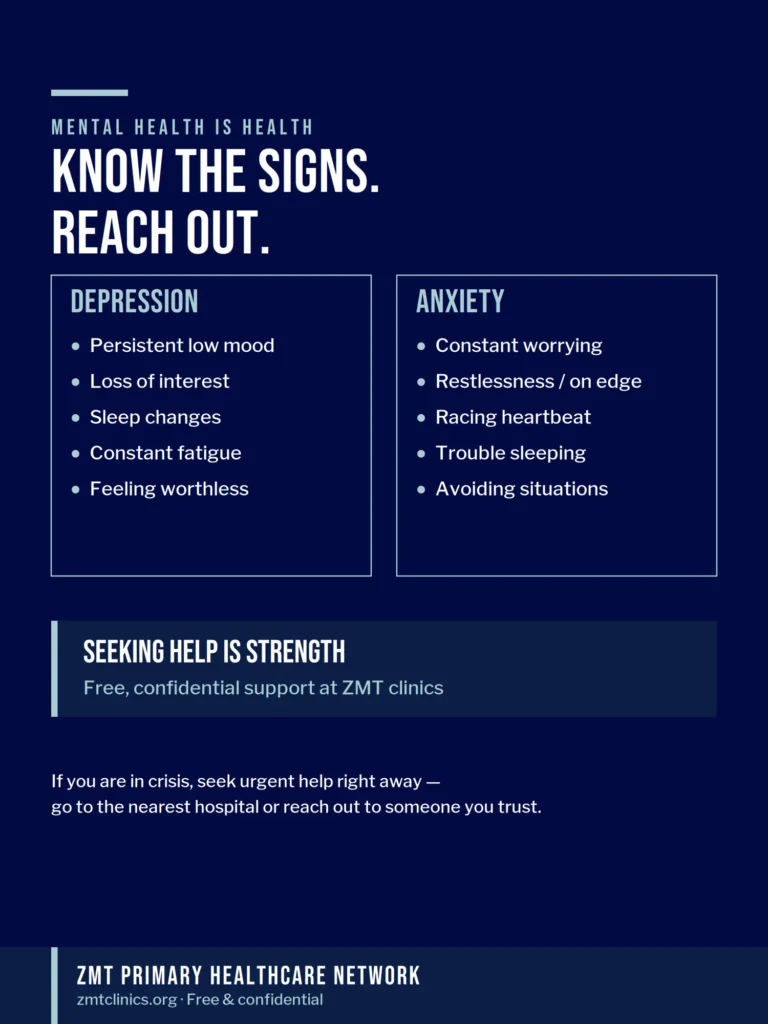
Depression is more than sadness. It is a persistent condition that affects how a person thinks, feels, and functions. Signs include:
- Persistent low mood or feeling empty
- Loss of interest in things once enjoyed
- Changes in sleep, either sleeping too much or too little
- Changes in appetite and weight
- Constant fatigue and low energy
- Difficulty concentrating
- Feelings of worthlessness or guilt
- Thoughts of self-harm or that life is not worth living
Anxiety
Anxiety is more than everyday worry. It is excessive, persistent fear or worry that interferes with daily life. Signs include:
- Constant worrying that is hard to control
- Restlessness or feeling on edge
- Rapid heartbeat, sweating, or trembling
- Difficulty sleeping due to worry
- Avoiding situations that trigger fear
- Physical symptoms like stomach problems or headaches
Stress-Related Difficulties
Chronic stress from financial hardship, family pressure, or trauma can seriously affect mental and physical health. Ongoing stress can lead to depression, anxiety, and physical illness if not addressed.
If you recognise these signs in yourself or someone close to you, please know that these are medical conditions, not character flaws. They can be treated, and seeking help is the right thing to do.
Why Seeking Help Is a Sign of Strength
There is a harmful myth that seeking mental health support is a sign of weakness. The truth is the opposite.
It takes courage to admit you are struggling. It takes strength to reach out for help. And it takes wisdom to recognise that some burdens are too heavy to carry alone.
Think of it this way. If you had chest pain, you would see a doctor. If you had a persistent fever, you would seek treatment. Mental health deserves the same care. Reaching out for support is not giving up. It is taking control of your health and your life.
Many people who seek mental health support wish they had done so sooner. They discover that with the right help, things that felt impossible become manageable, and hope returns.
How Mental Health Support Works
Mental health support takes different forms depending on the person and the condition.
Counselling and talk therapy provide a safe, confidential space to talk through what you are experiencing with a trained professional. Talking itself can bring relief, and a counsellor can help you develop practical strategies to cope and recover.
Psychiatric care may be recommended for some conditions, where a psychiatrist can assess whether medication would help alongside therapy.
Community support and awareness help reduce stigma and connect people with resources. Sometimes simply knowing that others understand and that help exists makes a difference.
Family involvement can be valuable, helping loved ones understand what a person is going through and how to support them.
The right approach depends on the individual. A good mental health service will assess your situation and recommend the support that fits your needs.
Where to Find Free Mental Health Support in Karachi
ZMT Clinics runs a dedicated mental health program that provides free, confidential support to people in Karachi’s underserved communities.
The program includes:
- Free counselling and talk therapy with trained professionals
- Psychiatric consultation where needed
- Support for depression, anxiety, and stress-related conditions
- Community awareness to reduce stigma and encourage help-seeking
- A compassionate, non-judgmental environment
Care is provided with complete confidentiality and dignity. You will not be judged. You will be listened to, understood, and helped.
To access support, find your nearest ZMT clinic using the Karachi Wellness Map, or learn more on the mental health program page. You can walk in during operating hours. Your visit and your information are kept private.
How to Support Someone Struggling With Mental Health
If someone you care about is struggling, your support can make an enormous difference. Here is how to help.
Listen without judgment. Sometimes the most powerful thing you can do is simply listen. Let them talk. Do not rush to fix or dismiss what they are feeling.
Take them seriously. Do not tell them to just cheer up or be grateful. Acknowledge that what they are experiencing is real and difficult.
Encourage them to seek help. Gently suggest professional support and offer to help them find it or go with them.
Stay connected. Isolation makes mental health struggles worse. Keep in touch, check in, and let them know you care.
Learn the warning signs. If someone talks about self-harm or expresses that life is not worth living, take it seriously and help them get professional support urgently.
Your care and patience can be a lifeline for someone in a dark place.
Breaking the Stigma, Together
The single biggest barrier to mental health care in Pakistan is stigma. As long as mental illness is seen as shameful, people will hide their suffering and avoid seeking help.
Changing this is something we can all do. Talk about mental health openly. Treat it as the health issue it is. Support those who struggle rather than judging them. And recognise that mental health conditions can affect anyone, regardless of faith, strength, or circumstances.
When we break the silence, we make it possible for people to get help. And when people get help, lives are saved and families are healed.
How Free Mental Health Care Is Funded
ZMT’s mental health program is provided free of charge, funded entirely by Zakat, Sadaqah, and charitable donations. Mental health care is one of the most underfunded areas of healthcare in Pakistan, which makes donor support all the more vital.
When you donate to support mental health care, you help provide counselling, psychiatric support, and hope to people who have nowhere else to turn. Funding mental health care prevents family breakdown, reduces suffering, and can quite literally save lives.
To support this work, visit the donation page. Mental health support is a profound form of Sadaqah, easing the invisible burdens that so many carry alone.
Frequently Asked Questions
Is mental health support at ZMT really free? Yes. Counselling, psychiatric consultation, and support are provided free to people in eligible communities.
Will my information be kept confidential? Yes. Your visit and everything you share are kept confidential.
What conditions does the program help with? Depression, anxiety, stress-related conditions, and other common mental health difficulties.
Do I need a referral? No. You can walk in during operating hours to access support.
Can I bring a family member for support? Yes. You are welcome to bring someone you trust, and family involvement can be helpful.
What if I am in crisis right now? If you are in immediate danger or crisis, please seek urgent help right away. Go to the nearest hospital emergency department or reach out to someone you trust immediately.
Final Word
Your mental health matters. Whatever you are going through, however heavy it feels, you deserve care, compassion, and support.
Mental health conditions are real and treatable. Seeking help is a sign of strength, not weakness. And in Karachi, free, confidential, compassionate mental health support is available at ZMT clinics.
If you are struggling, please reach out. Visit your nearest ZMT clinic or learn more at the mental health program page. You do not have to carry this alone.
And if you would like to help others access mental health care, visit the donation page. Your support could be the reason someone finds hope again.
You matter. Your life matters. Help is here.
If you or someone you know is experiencing a mental health crisis, please seek immediate help from a hospital or a trusted person. This article is for general awareness and does not replace professional medical care.
ZMT Primary Healthcare Network. Quality primary healthcare for every woman and child in Pakistan.
